
The short answer
When sourcing custom waterproof duffel bags with wheels, identify the intended packed contents and review the complete supplied configuration in its storage, rolling and lifting positions. Record wheel-area clearance, handle access, body movement and the location of loose straps. Ask the supplier to identify the components and intended operating guidance. The output should be an interference and packed-footprint record; a capacity label or a wheel photograph cannot establish load capability or compatibility with every storage space.
Review three envelopes instead of one capacity label
A wheeled duffel occupies different space when packed for storage, positioned for rolling and held by its carrying points. The comparison becomes difficult if a quotation lists only a nominal capacity and an empty-body dimension. Define the contents and the states that matter to your buyer before reviewing the hardware.
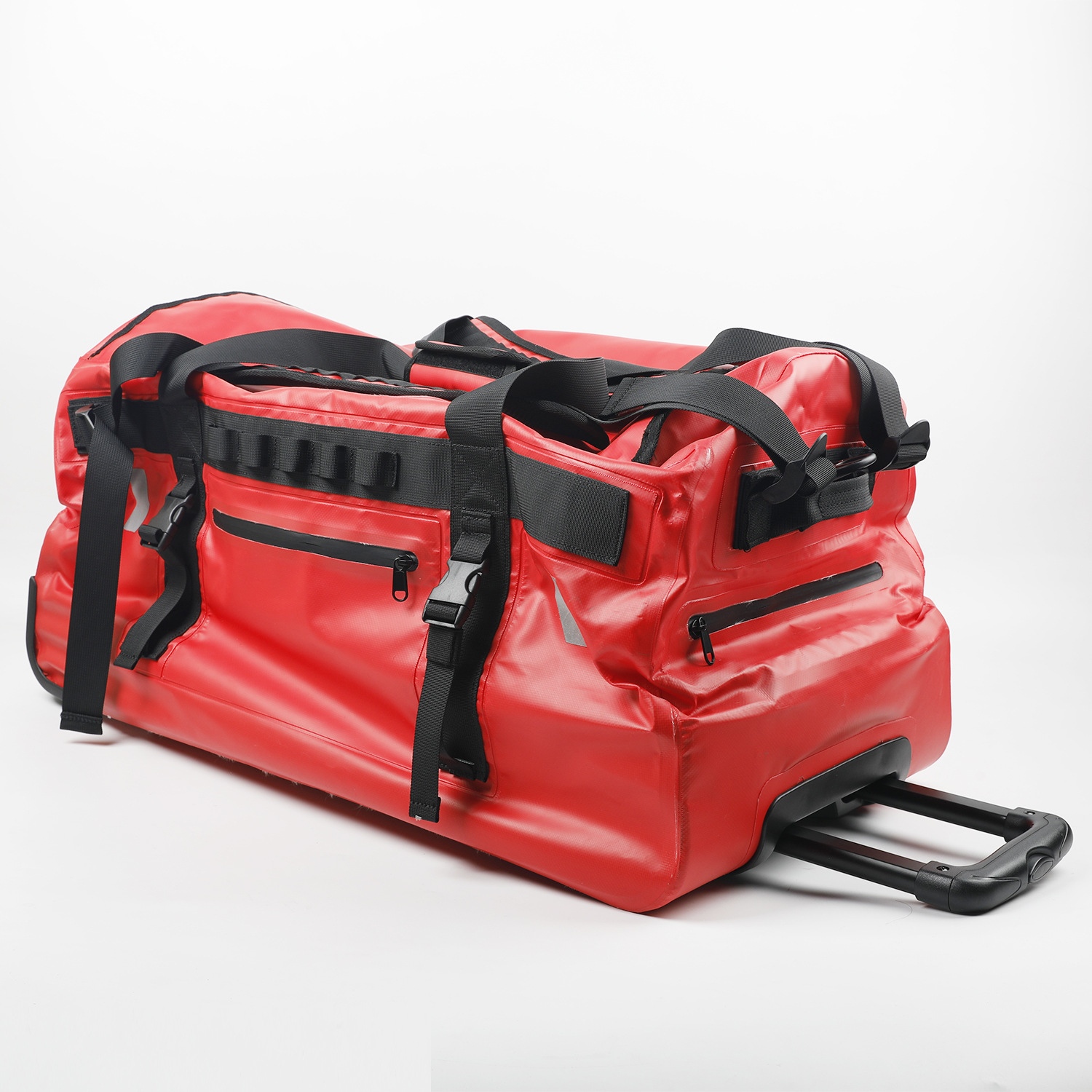
For custom waterproof duffel bags, ask the supplier to identify the complete supplied configuration. Record which handles, straps and rolling components are included, and request the intended operating and storage guidance. A bag photographed with wheels is a useful format reference; it does not establish the required load, route or handling result for your programme.
The wheeled waterproof duffel reference in the waterproof bag collection can be used to mark the relevant body and component positions. Confirm the selected configuration rather than inferring specifications from the name.
Map the body, wheel area and handle access
Use a drawing or annotated views to identify the parts that control each occupied envelope. Mark the review orientation so a later photograph can be compared correctly. If a handle is repositioned or a strap is retained differently, name that condition in the record.
| State | What to record | Interference question | Purchasing consequence |
|---|---|---|---|
| Packed storage | Complete outside envelope with supplied parts positioned | Does a component project beyond the assumed storage outline? | Use the actual packed-unit dimensions |
| Rolling position | Body arrangement, handle position and intended contents | Where can the body or loose components contact the rolling area? | Review retention and component placement |
| Lifting access | The named carrying points and access around them | Do contents or another component obstruct the intended grip? | Clarify the handling arrangement |
| Unit packing | Folding sequence and accessory placement | Are parts removed, protected or retained differently? | Identify the complete supplied pack |
Use consistent contents for a meaningful comparison
A soft body may move differently when filled with different items. State the representative contents and their arrangement for the review. Keep the same arrangement when comparing a proposed component change, unless the change in contents is the point being investigated. An empty product photograph cannot settle a loaded-clearance question.
Ask reviewers to name the point of contact or obstruction. Distinguish body movement near the wheel area from a loose strap entering that area, and distinguish a handle-access concern from a body-size concern. The supplier can then investigate a specific interface instead of replacing unrelated components in response to a general report that the bag is awkward.
Treat the rolling hardware as part of the packed unit
Do not plan carton space from usable bag capacity. Request the actual folded or packed envelope of the supplied unit, including handles, wheel-area components and accessories. Identify whether anything is removed for packing and what the receiving customer must do before use.
Review the proposed packing sequence against the selected construction. Ask how components are positioned and protected during shipment, and keep those instructions with the unit-pack description. The export carton packing guide supports the broader freight brief, while the wheeled-duffel record supplies the model-specific envelope and component arrangement it needs.
Illustrative brief: a transport format with a defined storage slot
A hypothetical outdoor-equipment distributor wants a branded wheeled duffel for a defined contents set and a known storage space. The buyer supplies the storage envelope and requests review of the complete bag in the supplier's intended rolling and lifting configurations. The enquiry does not prescribe an unverified load limit or wheel specification.
The sample record shows the contents, body position, carrying-point access and any contact near the rolling area. Reviewers also photograph the complete packed unit in the proposed storage position. If a strap is retained differently to address interference, that arrangement is added to the supplied instructions. A changed handle or packing sequence receives its own revision rather than being treated as a cosmetic alteration.
Hand over an interference and footprint record
Release the model, contents reference, component list, handling guidance and annotated review photographs together. Identify the actual packed dimensions and the positions in which they were measured. Keep any required durability or protection evaluation separate from the fit and access observations.
The sample approval process helps preserve the accepted configuration. Before a repeat order, compare proposed changes to the rolling components, handles, strap retention and packing against the original clearance record. Product descriptions and shipping plans should refer to the supplied configuration, not a body-only measurement or an earlier photograph taken before accessories were added.
Discuss the selected model and purchasing brief
Send the model references, quantity split and the decision record described in this guide. Add your artwork, packing requirements, destination and required delivery date.
Request a project quotationEmail michael@outdoorsbloom.com or denggaoz@gmail.com.