
The short answer
Identify the exact motorcycle configuration and intended support area, then provide measured references and views of the proposed attachment routes. Define the packed contents, access requirements and clearance questions for the installation review. Keep mounting components distinct from carry and closure parts, and do not treat stationary fit observations as a vehicle-use or strength approval. Release the vehicle sheet and bag revision together with unresolved evaluation requirements clearly identified.
Identify the motorcycle and the intended luggage location
A useful brief for custom waterproof motorcycle bags starts with the installation, not the bag's capacity label. Identify the motorcycle model and configuration, the intended rear-seat or rack location, and any existing luggage hardware that forms part of the proposal. Include the changes that distinguish the reviewed vehicle from a standard catalogue photograph.
Photograph the intended location from above, from each side and from the rear. Use consistent reference points for measurements and identify any removable seat, carrier or accessory shown. A supplier needs to understand which surfaces and attachment provisions are actually available in the proposed installation.
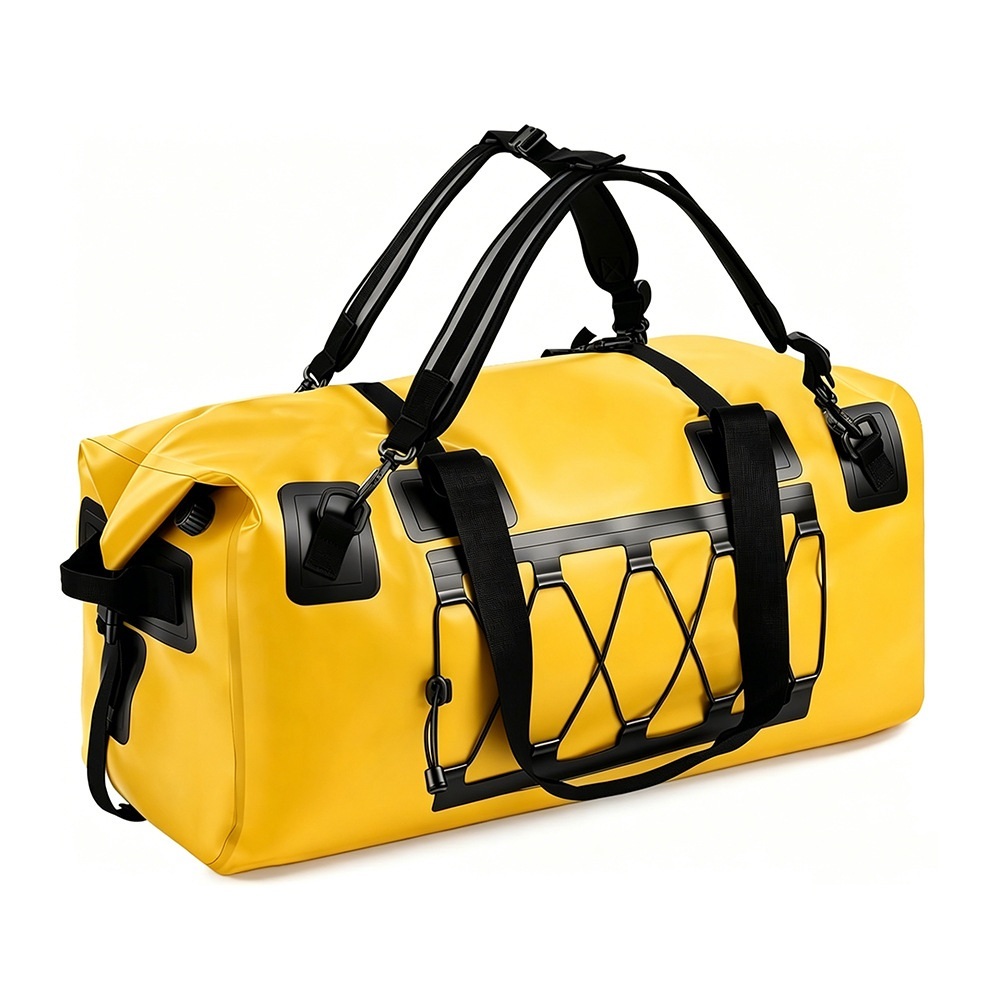
The bungee-front tail-bag reference and rear-seat bag reference offer product directions. Their capacity descriptions do not establish fit on a particular motorcycle.
Draw the bag location and its clearance envelope
Record the support outline, available width and length, plus surrounding components relevant to the installation review. Mark moving parts, hot areas, required vehicle access and any space needed for the rider or passenger configuration being considered. Ask the responsible reviewer to define applicable clearances rather than inventing a universal distance.
Show the intended packed-bag envelope as well as the empty bag. Include the load description and measured review weight when those are available. A bag that rests neatly on an unloaded photograph may occupy a different outline when packed and when its closure is completed.
Keep the installation requirements separate from the requested material, artwork and packing. This allows a waterproof motorcycle bag manufacturer to identify which proposed dimensions or attachment changes address fit and which are visual changes.
Give each measurement a named start and end point and state the units. If a location is difficult to measure, mark it as unresolved rather than estimating from an angled photograph. Identify the vehicle's photographed condition so the reviewer knows which seat, carrier and accessories were present when the support outline was recorded.
Use a measurement and photo record with defined fields
| Record | Buyer input | Question for review |
|---|---|---|
| Vehicle configuration | Model identity, relevant accessories and dated reference views. | Which exact installation does the brief describe? |
| Support area | Measured support outline and fixed reference points. | How does the proposed loaded bag sit on that area? |
| Attachment provisions | Available locations and photographs of the proposed routes. | Which bag components are intended for mounting, and which are not? |
| Clearance envelope | Surrounding components and requirements identified for this vehicle. | What must remain clear in the reviewed arrangement? |
| Access sequence | Opening, unloading and vehicle-access requirements. | Which straps or components must move before each action? |
Review the mounting route as a separate configuration
Ask for the proposed strap routes and bag attachment points to be identified on the same drawing. Distinguish mounting components from carry handles, closure webbing and compression straps. A similar appearance does not give every strap the same intended function.
Review the packed bag in the proposed position and record the access sequence. State whether the top can be opened while the mounting arrangement remains in place and what is removed first when unloading. Keep any required installation, strength or vehicle-use evaluation separate from these stationary access observations.
The B2B quotation brief helps organize commercial information. Attach the installation record to it so a price request for motorcycle luggage also describes the interface the product must be reviewed against.
Illustrative brief: one luggage concept for two rear-seat layouts
A buyer proposes one branded tail-bag direction for two motorcycle configurations. The first has a different support outline from the second. This example is a documentation exercise, not a fit approval for either vehicle.
The buyer creates two installation sheets with their own photographs, support measurements and available attachment provisions. The same proposed packed contents are used for the initial comparison. Any difference in bag position, mounting route or access is recorded against the relevant vehicle sheet.
The review may show that a common body direction is worth developing while the attachment arrangements need separate consideration. Keep those decisions visible. Do not turn acceptance of one photographed installation into a general statement that the bag fits both vehicles or every model in the same motorcycle category.
Release a named installation reference with the order brief
Send the selected direction from the motorcycle bag collection, vehicle sheets, proposed packed envelope, mounting-route drawings and access requirements together. Identify who will review the installation questions and what information is still needed.
The handoff should connect vehicle configuration, bag revision, supplied mounting components and accepted observations. Keep unresolved clearance or evaluation requirements open rather than hiding them behind an approved artwork file. That gives a waterproof motorcycle luggage project a defined interface for further review and prevents its capacity label from becoming an unsupported fit guarantee.
Retain the original measurement sheet when the vehicle or luggage hardware changes. Create a new configuration revision and identify the observations that need repeating; do not overwrite the record that explains the earlier approval scope.
Discuss the selected model and purchasing brief
Send the model references, quantity split and the decision record described in this guide. Add your artwork, packing requirements, destination and required delivery date.
Request a project quotationEmail michael@outdoorsbloom.com or denggaoz@gmail.com.