
The short answer
For bulk folding fishing buckets, agree the intended contents and handling tasks before reviewing handles or the rim. Observe the complete sample in its opened, handled and folded states, recording component positions and any interference. Keep handling observations separate from a validated load rating. A practical log identifies the sample, contents, task, result and proposed change, then links the accepted folding sequence to the supplied instructions and unit pack.
List the handling tasks the bucket must support
A handle can look substantial while leaving the actual purchasing requirement undefined. The buyer may be concerned with reaching the grip, keeping the opening arranged during handling or returning the body to its packed state. Start by naming those tasks and the intended contents, rather than asking for a general claim of strong handles.
For bulk folding fishing buckets, record which sample and supplied configuration will be reviewed. Identify the position of the handle and any cover before each observation. Ask the supplier to provide the intended handling and folding guidance, including any operating limits that must be confirmed for the selected model. The review should follow that agreed scope rather than imposing an unverified load or handling routine.
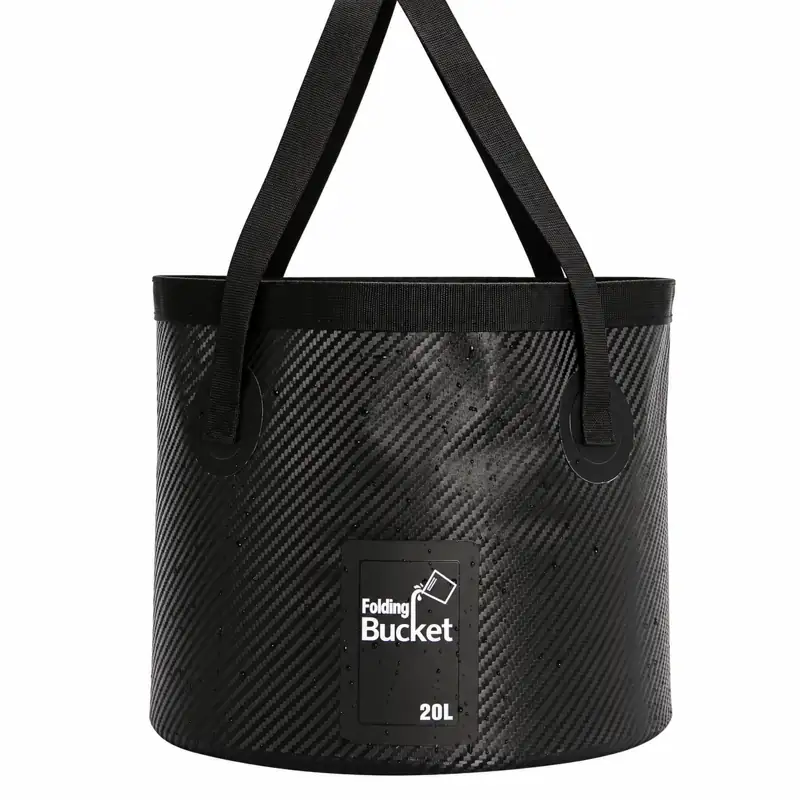
The carbon-pattern bucket and round bucket reference offer starting points in the collapsible fishing-bucket collection. Their photographs are not load-test evidence.
Observe the handle and rim as one assembly
Mark the handle attachment locations and the rim areas relevant to access. Review the sample with the intended contents and in the agreed state. Note whether a concern relates to grip access, the position of a component or a change in body shape. These descriptions give the supplier more information than a single comfortable or uncomfortable verdict.
| Review item | Condition to record | Observation to capture | Follow-up |
|---|---|---|---|
| Grip access | Handle position and the intended contents | Where access is obstructed or unclear | Identify the component or geometry to review |
| Rim arrangement | Opened state before and after the task | Position of the opening and nearby components | Review the agreed function of the rim |
| Transition to folding | Contents removed and cover position identified | The sequence followed and any interference | Clarify the proposed instructions |
| Packed state | Complete supplied set in its unit pack | Location of handles, rim and loose parts | Confirm the packed-unit description |
Keep any required strength or durability evaluation in a separate test brief. An observation of the sample being handled does not by itself establish a public load rating.
Record the sequence instead of only the final folded size
A photograph of a neatly folded bucket can conceal several different sequences. Ask how the rim and base are positioned and where the handles and cover are placed. If a piece is removed, identify it in both the supplied-set list and the packing instructions.
Record the folding sequence with labelled views that another reviewer can follow. Where the supplier proposes more than one storage state, distinguish the normal unit pack from other arrangements. This prevents a later inspection team from rejecting an acceptable pack simply because it differs from an unlabeled photograph, or accepting a different fold that introduces unwanted contact between components.
Describe a change by its effect on the original task
A revised handle length or rim arrangement may affect more than the issue that triggered it. Ask the supplier to mark the proposed change and identify whether access, folding or the packed envelope also changes. Review the complete revised sample where those interfaces are connected.
Preserve the earlier observation rather than replacing it with a new photograph labelled approved. The record should explain what problem was addressed, which component changed and what was reviewed afterward. If material or attachment details are also changed, identify them explicitly. This keeps a visual correction from becoming an unrecorded construction substitution.
Illustrative brief: a folding accessory range with a shared pack
A hypothetical outdoor distributor wants a folding bucket that can be opened for a defined equipment set and returned to a named individual pack. The buyer provides the contents reference and asks the supplier to demonstrate the proposed handle, rim and folding arrangement on the selected model.
The observation log captures the opening before handling, the position of the handle during the agreed task and the arrangement after the contents are removed. Reviewers then follow the supplied folding sequence and record the complete packed unit. If the handle or cover obstructs one step, the issue is tied to that step and component. The example does not assume a tested carrying limit or a particular rim construction.
Keep the handling log with the approved supplied set
Release the selected model, sample revision, intended contents, accepted handling guidance and folding photographs together. Identify which parts are supplied and any instructions that must be included. Keep measured dimensions separate from subjective comments, and keep unresolved questions visible until the responsible parties confirm them.
The inspection checklist helps structure wider order checks. Use the sample approval process for the accepted configuration. The handling log remains the specific evidence of what was reviewed; a later substitute handle, rim component or packing sequence should be compared against the tasks recorded there.
Discuss the selected model and purchasing brief
Send the model references, quantity split and the decision record described in this guide. Add your artwork, packing requirements, destination and required delivery date.
Request a project quotationEmail michael@outdoorsbloom.com or denggaoz@gmail.com.