
The short answer
Ask for the exact fold, nesting or component-separation method and compare it with an expanded reference using the same unit pack and accessories. Agree the packing exposure and unpacking observation conditions, then record product shape, access and presentation. Measure carton dimensions and quantities for each accepted alternative. Release the selected packing sequence with photographs so reduced freight volume does not conceal a different supplied set or an unapproved product condition.
Compare the shipping shape with the product you approved
For wholesale cooler bags, a smaller carton is useful only when the packed product and its condition after unpacking remain acceptable. Ask for the proposed fold or compression arrangement before comparing freight volume. An expanded showroom sample and a compressed shipment are different states of the same purchasing decision.
Record the cooler model, material configuration, supplied accessories and unit pack. Identify which components are folded, restrained, separated or placed inside the body. The discussion should address the selected construction; do not assume every insulated bag can use the same shipping fold.
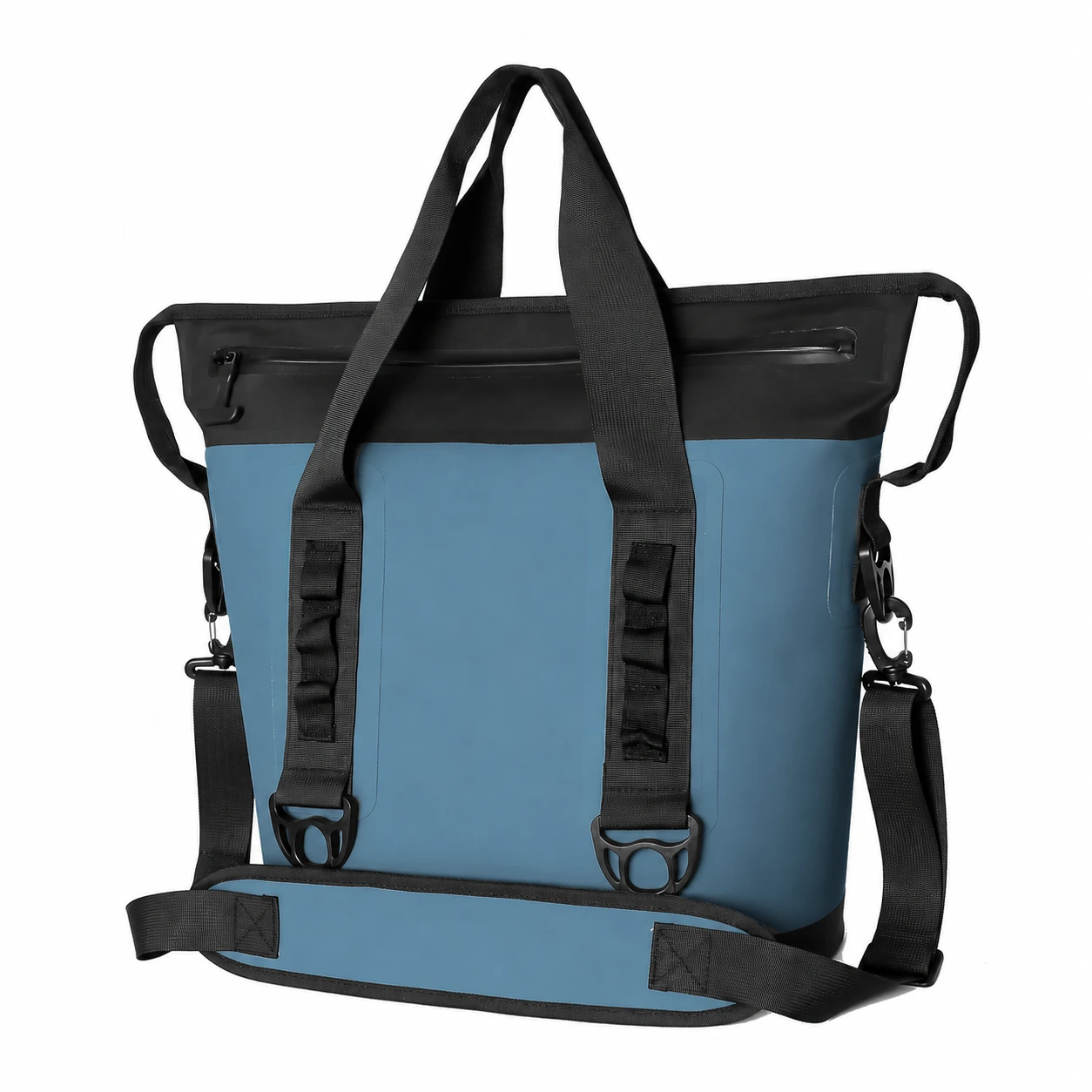
The cooler tote and insulated cooler backpack references illustrate different body and carrying formats. Request a packing demonstration for the exact configuration proposed in your quotation.
Describe the proposed packing action precisely
Words such as “flat packed” can conceal important differences. A supplier might fold the body at one location, nest products, detach a component or use a restraint to reduce the packed outline. Ask for photographs of each step and the final unit, including the placement of straps, labels and removable parts.
Separate the packing method from any claim about material recovery. Agree how a sample will be packed, how long the proposed packing exposure will last, and the conditions under which it will be unpacked and observed. Record the agreed sequence instead of choosing an arbitrary recovery period for every model.
If an attachment or closure sits on a proposed fold, mark it on the photograph. Ask whether another arrangement is available. A freight comparison is incomplete if it hides a construction change that was not included in the approved sample.
Keep volume and recovery in the same comparison
| Proposal | Packing information | Unpacking review | Decision to record |
|---|---|---|---|
| Expanded unit | Unit pack, accessories and proposed carton arrangement. | Reference appearance and opening operation. | The baseline against which alternatives are compared. |
| Specified fold | Fold line, restraint and component positions. | Body shape, access and visible changes after the agreed exposure. | Whether this exact fold is accepted or needs revision. |
| Nested arrangement | Which units or components enter another unit and how they are separated. | Contact marks, component identity and completeness on removal. | Whether packing and receiving staff can repeat the arrangement. |
| Separated components | Part list, identification and reassembly instructions. | Missing-part risk and the steps needed to restore the supplied set. | Who performs reassembly and what the quotation includes. |
Calculate freight volume from measured cartons
Ask for carton dimensions and quantity per carton for each proposed arrangement. Keep the unit of measurement visible. For dimensions recorded in centimetres, carton volume in cubic metres is length multiplied by width multiplied by height, divided by one million. Multiply by the carton count only after checking how the order quantity has been allocated.
Compare like-for-like quantities and the same retail pack. A smaller carton may represent fewer products rather than a better packing arrangement. Record gross weight separately from volume and ask the freight provider which measurement basis applies to the route and service being quoted.
The export-carton packing guide covers carton data and receiving information. Add the insulated product's unpacking observations to make that shipping record useful for bulk cooler bags.
Illustrative review: expanded tote versus a proposed fold
A buyer plans one cooler tote configuration with a printed retail sleeve. The supplier proposes a fold to reduce shipment volume. This is a comparison example, not a packing recommendation for the referenced product.
Prepare an expanded reference and a sample packed using the proposed fold, with the same sleeve and accessories. Photograph the packing action and measure the resulting cartons. After the agreed exposure, unpack the sample and record shape, closure access, handle position and sleeve condition beside the expanded reference.
The buyer may accept the fold, request a different fold or retain the expanded arrangement. Keep that choice beside the freight-volume comparison. A lower volume figure alone should not be treated as approval of the product condition or the retail presentation after unpacking.
Release a repeatable packing instruction
Send the selected model from the cooler and insulated bag collection, the photographed packing sequence, measured carton data and recovery observations with the order brief. Specify whether the accepted method applies to every color and component configuration.
The release record should identify sample revision, packing exposure, observation conditions, unit pack and carton arrangement. Store an approved final-pack photograph alongside it. That gives wholesale soft coolers a defined shipping configuration and helps the receiving team distinguish an agreed fold from an unexpected change in the delivered product.
Before using the volume in an order comparison, state whether the carton was physically packed with the quoted unit set or is still a planning estimate. Keep an estimated arrangement visibly provisional. Ask for the final measured carton data when the unit pack and supplied accessories are settled, rather than carrying an early estimate unchanged into shipping instructions.
Discuss the selected model and purchasing brief
Send the model references, quantity split and the decision record described in this guide. Add your artwork, packing requirements, destination and required delivery date.
Request a project quotationEmail michael@outdoorsbloom.com or denggaoz@gmail.com.