
The short answer
Measure containers with lids and other supplied parts, include the intended cooling media, and define the required loading and retrieval order. Review the same set on each candidate sample. Record body fit, opening clearance, closure interference and which items must move during retrieval separately. This identifies whether a different arrangement, opening or construction needs review without treating a nominal litre figure as evidence of convenient access.
Measure the load-in route as well as the storage space
A cooler bag manufacturer can quote a body size without knowing whether your containers can pass through its opening conveniently. Nominal capacity describes only part of the buying decision. The opening shape, closure path and order of loading determine how the intended set actually enters and leaves the bag.
Start with the containers in their supplied condition: lids, handles, protective covers and any protruding parts included. Record the intended cooling media and whether it is placed beside, below or above the containers. The relevant envelope is the complete packed set, not the dimensions of an empty food box.
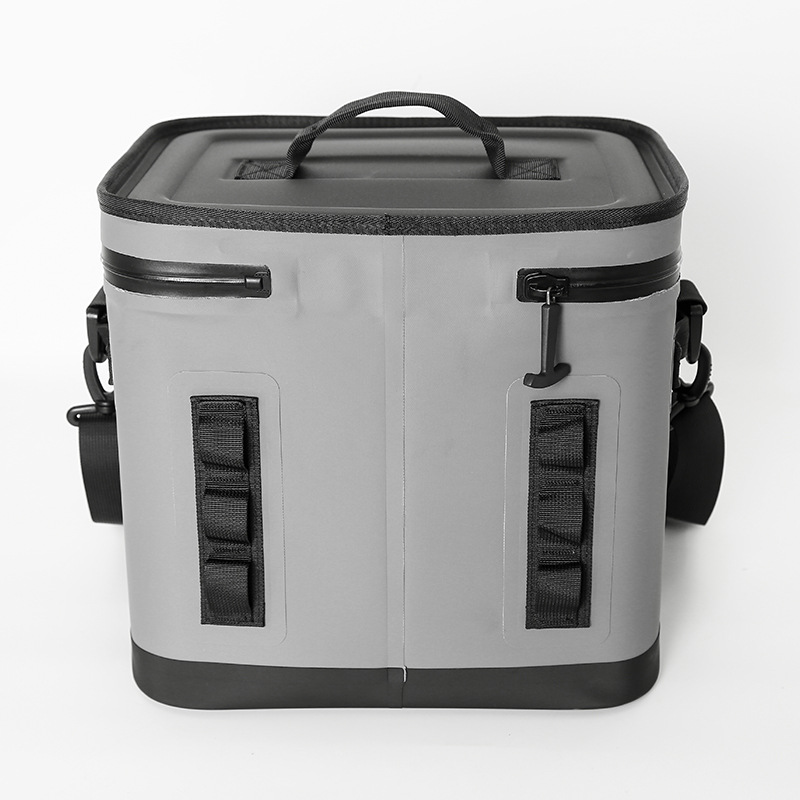
The compact insulated cooler reference and picnic soft cooler reference provide different starting formats. Confirm the selected opening and interior configuration rather than assuming that a catalogue size settles container access.
Define a repeatable load-in and load-out trial
Give each container an identity and photograph it beside a scale reference. Note whether it should remain upright, can be turned during insertion, or must be removed independently of the other contents. These are proposed user requirements to review on a sample, not universal requirements for every cooler.
Run the same sequence for each candidate bag. Open the closure as intended, load the cooling media and containers in the agreed order, close the bag, then retrieve the item specified by the buyer. Record where a different sequence or a second hand is needed. Avoid forcing the closure to make a planned load appear acceptable.
The bulk lunch cooler sizing guide supports overall load planning. This trial adds the route through the opening and the retrieval sequence that a dimensional list alone cannot show.
Use a trial matrix that separates the causes of a problem
| Trial | Hold constant | Observe and record |
|---|---|---|
| Largest container first | Container identity, lid and intended orientation. | Opening clearance and the position required during insertion. |
| Complete load | Container set and quantity of proposed cooling media. | Space around the closure path and any interference between contents. |
| Selected-item retrieval | The item the user should access and the bag's normal resting position. | Which other contents must move before that item can be removed. |
| Unloading and reset | The same packed set and handling sequence. | Snags, restricted access and whether the next trial starts in the same condition. |
Choose the change that addresses the observed restriction
If an item fits inside but struggles at the mouth, increasing body height may not solve the actual problem. Discuss the opening shape, closure arrangement or loading orientation. If the restriction appears only after the cooling media is added, review the location and envelope of that media before changing every body dimension.
Keep these observations separate from an insulation or ice-retention evaluation. A useful access trial does not establish a thermal result. For a soft cooler manufacturer brief, describe the access requirement and any separate performance evaluation in different sections of the specification.
Ask the supplier to state which proposed changes can use an existing reference and which require development. This keeps an access correction from turning into an unspecified redesign with a different material or closure.
Illustrative trial: two lunch boxes and a drink container
A retail buyer proposes a lunch set containing two lidded boxes, one drink container and a chosen cooling pack. This example is a trial plan, not a capacity claim for the referenced models. The buyer wants the drink container to be removable without taking both boxes out.
In the first arrangement, the drink container sits behind the boxes. In the second, it sits beside them. Record the mouth clearance, closing path and retrieval sequence for each arrangement using the same objects. The buyer can then decide whether a changed packing arrangement meets the requirement or whether the opening needs development.
Photograph the accepted arrangement from above and beside the open mouth. Keep the container identities with those photographs so a later change of lid or handle can be reviewed against the same access requirement.
If the retail container supplier changes the shape of a lid, do not substitute it silently during the next sample review. Update the object list and explain which trial needs repeating. A container with the same stated volume may still present a different envelope to the cooler opening.
Give the quotation a defined packed-load reference
Send the selected direction from the cooler and insulated bag collection, container measurements, load photographs, required access order and quantity schedule. Identify the contents supplied for sample review and any proposed substitutes that still need agreement.
The handoff record should distinguish body fit, opening clearance, closing clearance and selected-item retrieval. State which arrangement is accepted and what remains unresolved. For custom soft coolers, that record is more useful than a request for “a little more room,” because it tells the development team exactly which part of the user task needs to change.
Discuss the selected model and purchasing brief
Send the model references, quantity split and the decision record described in this guide. Add your artwork, packing requirements, destination and required delivery date.
Request a project quotationEmail michael@outdoorsbloom.com or denggaoz@gmail.com.