
The short answer
Identify the outgoing and incoming configurations separately, then freeze a dated stock snapshot before changing allocations. Protect existing commitments, obtain agreement on open supplier orders and decide the destination or status of each remaining stock group. Release the replacement through its own product, instruction and pack approval. The handoff is a changeover register with quantities, owners and channel dates; a new range decision does not automatically authorise substitutions, cancellations, returns or relabelling of old stock.
Decide what changes and what remains available
Replacing a model in a bulk waterproof phone pouch range creates a stock decision as well as a development decision. The buyer may retain the earlier configuration for existing commitments, offer both versions for a defined period, or stop new orders for the outgoing version. State which route is intended before changing purchase descriptions or releasing a replacement.
Give the outgoing and incoming configurations separate identities. A revised closure, lanyard, instruction insert or complete product can affect what a customer expects to receive. A commercial preference for a new model does not by itself make accepted earlier stock defective, interchangeable or approved for another use.
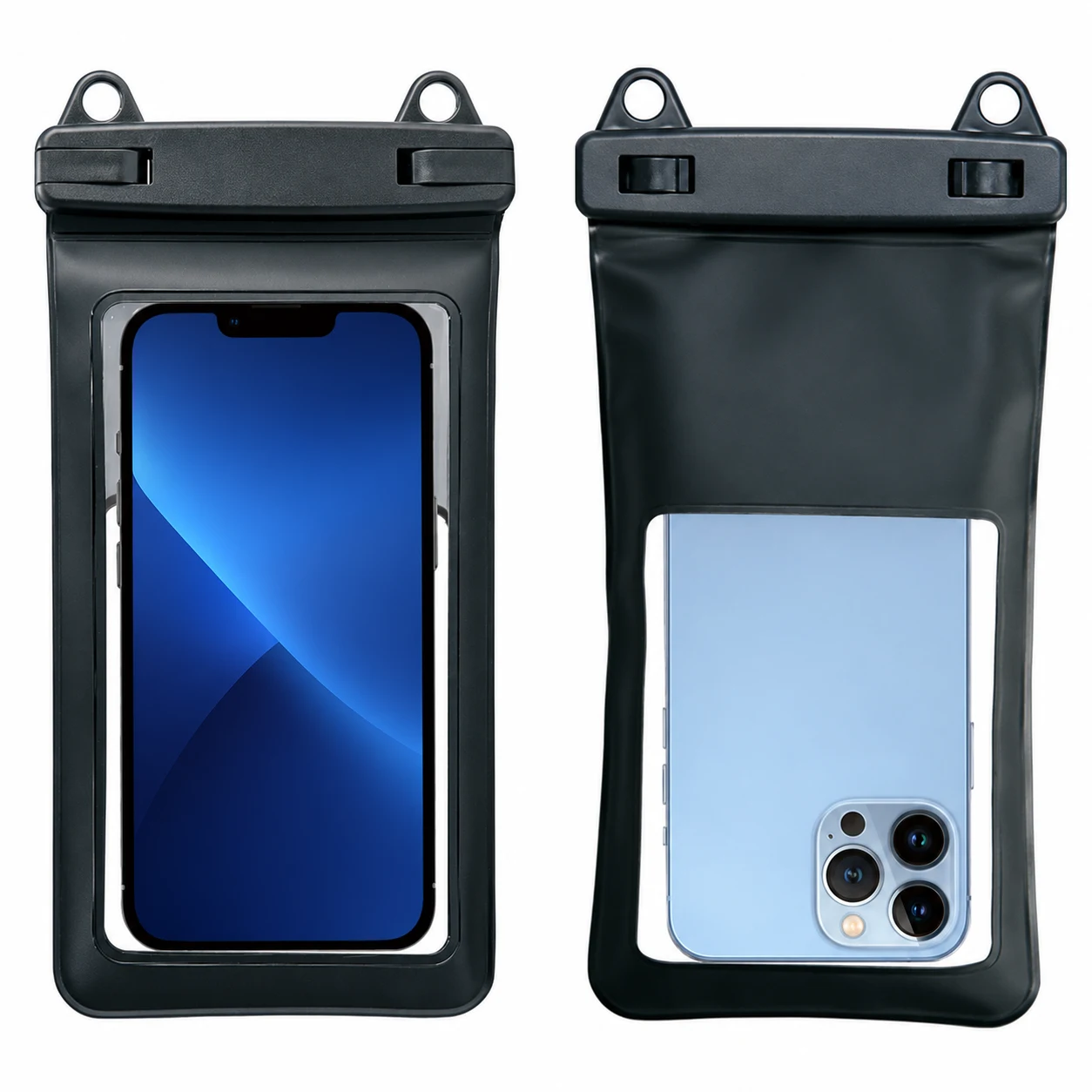
The dual-hook textured pouch and U-frame pouch are distinct product references. They illustrate why a range change should name both configurations; they are not presented here as successive revisions of one product.
Freeze a stock snapshot before reallocating units
Record the cut-off date and location of the stock count. Separate units available for allocation from customer reservations, stock on hold, display samples and incoming purchase orders. Keep the product and pack revision attached to each group. A total warehouse balance alone cannot show which commitments remain outstanding.
Review open quotations and customer orders against that snapshot. Identify which configuration was offered and whether a change requires the customer's agreement. Do not fulfil an earlier-model order with the replacement merely because the color or headline description is similar. Keep an uncertain allocation open until the responsible buyer resolves it.
Assign a disposition to each outgoing-stock group
| Stock or commitment | Decision to agree | Release record |
|---|---|---|
| Reserved outgoing units | Retain for the identified order or agree a documented change. | Customer commitment, product revision and authorised allocation. |
| Uncommitted outgoing units | Allocate to a defined channel, retain as stock or cease offering them. | Quantity, destination, condition and approved product information. |
| Incoming earlier-version order | Confirm whether it proceeds, changes or is cancelled under agreed terms. | Supplier confirmation and the affected purchase-order revision. |
| Returns or stock on hold | Review identity, condition and the applicable resolution separately. | Investigation status and an authorised disposition, without automatic resale. |
| Proposed replacement | Complete its own approval before releasing it for the intended channel. | Accepted product, instruction and pack references for the new configuration. |
This is a transition record, not a general mixed-carton allocation sheet. Use the retail-packaging guide once the destination and supplied configuration have been decided. A proposed stock action does not establish cancellation, return or compensation rights.
Illustrative plan: honour reservations and close the earlier assortment
A hypothetical distributor has 120 units of an accepted earlier configuration. Forty are reserved for an existing order and 80 remain uncommitted. The buyer proposes allocating 50 of those remaining units to one outlet and 30 to another, while a separately identified replacement awaits approval. These are illustrative inventory figures, not order minimums or an account of an actual customer programme.
The transition sheet retains the original 40-unit commitment. It records the two proposed outlet allocations against the outgoing product information and pack revision. The buyer confirms the outlets' acceptance before releasing those allocations. The replacement remains unavailable for fulfilment until its own review is complete; the buyer does not relabel the remaining stock as the new version.
An open supplier order for more earlier-version units is listed separately. Its treatment requires an explicit agreement rather than an assumption that a range decision automatically cancels production.
Change customer information with the configuration it describes
Identify when each sales channel stops accepting orders for the outgoing version and begins offering the replacement. Check quotations, product images, order codes and instruction resources against those dates. Retain the information needed by customers who already received the earlier product, even after it leaves the active range.
If the closing routine or supplied accessory changes, keep the applicable instruction version identifiable. Replacing a picture in a shared folder should not leave earlier stock paired with new operating illustrations. A changed product description also needs its own supporting information; approval of the earlier model does not establish the replacement's fit or protection claims. Use the sample approval process for that separate release.
Release a transition register with quantities and owners
The handoff should identify both configurations, the dated stock snapshot, reservations, incoming orders, approved destinations and unresolved actions. Give each action an owner, decision date and status. Record actual quantities moved against the authorised allocation so the final balance can be explained.
Close the transition only when remaining outgoing stock and commitments have an agreed disposition. Keep its history retrievable for receiving, customer enquiries and later reorders. When selecting a new direction from the waterproof phone pouch collection, carry forward that history alongside the new product approval rather than overwriting it.
Discuss the selected model and purchasing brief
Send the model references, quantity split and the decision record described in this guide. Add your artwork, packing requirements, destination and required delivery date.
Request a project quotationEmail michael@outdoorsbloom.com or denggaoz@gmail.com.