
The short answer
Specify which contents must be visible, from which side and in what orientation. Compare proposed window samples using the same objects and viewing conditions, then review artwork against fixed construction features. Keep window appearance separate from compartment structure, device-use evaluation and protection requirements. The approval record should identify material reference, geometry, comparison photographs and artwork revision for each selected model.
Define what the user needs to see
When developing custom waterproof pouches, begin the window discussion with the viewing task. A buyer may want to identify stored contents, read a device display, see a rear camera area or reserve part of the body for artwork. These needs should be written separately rather than compressed into a request for “a clear pouch.”
List the intended contents and the orientation in which they will be viewed. Mark the areas that must remain visible and those that may be covered by a panel or graphic. Use an actual device, card or other agreed object during the review so a general transparency description becomes a specific purchasing decision.
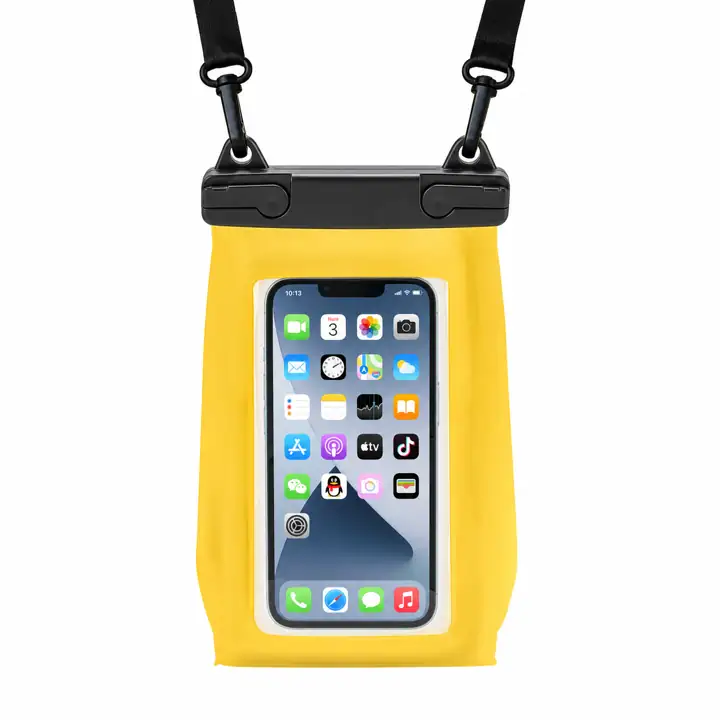
The semi-transparent phone pouch reference and dual-window phone pouch reference offer different visual layouts. Confirm the selected material and construction separately from the appearance shown in their photographs.
Compare samples under the same viewing conditions
Use the same contents, position and lighting arrangement when comparing proposed window samples. Identify whether the observation is made from the front, rear or an angle. Otherwise, a change in the object or photograph can be mistaken for a difference in the window layout.
Ask for the proposed finish and color reference to be identified with each sample. Clear, tinted and translucent are useful starting descriptions, but the buyer should still review the actual proposed surface. Keep artwork off the comparison area until the window decision is understood, then review the complete design.
After selecting a layout, repeat the relevant viewing observations with the proposed artwork in place. A graphic on one side may affect how the contents are presented from another side. Record the completed design in the intended orientation so the approved window is not documented only as an undecorated material sample.
If device operation or camera use is intended, define that evaluation separately. Identifying a phone through a window does not establish every functional result that might be associated with the product's name.
Compare layout choices by viewing and artwork requirements
| Layout direction | Question for the contents | Question for the artwork |
|---|---|---|
| Larger viewing area | Which contents need to remain identifiable in their normal position? | What permanent information can move to another panel or pack? |
| Defined front window | Does the target object remain within the proposed viewing boundary? | How are logo edges and fixed features positioned around that boundary? |
| Front and rear views | Which side serves each viewing task and what orientation is required? | Can the design distinguish front from rear without obscuring either task? |
| Translucent or colored area | What level of identification or concealment does the buyer actually want to review? | How does the proposed graphic appear on the selected surface sample? |
Keep the window boundary tied to the product construction
Mark the viewing boundary against fixed reference points, including closure, seams and any attachment area. Ask how a proposed change to the body or window outline affects the rest of the construction. A larger artwork file or a different object position should not silently redefine the accepted window.
For a multi-model range, record the required area for each model. Some may share a visual direction while using different outlines. Keep the selected material reference, window geometry and artwork revision together so a later order can be compared with the approved configuration.
The window and compartment comparison guide explains why a viewing layout should not be confused with a storage structure. Use the current record to choose what should be visible after deciding how the contents will be organized.
Illustrative comparison: visible phone front and separate identification
A buyer proposes a pouch that shows a phone's front while keeping the branding panel easy to distinguish. This example is a layout brief, not a compatibility or performance claim for a referenced model.
The buyer prepares two proposed layouts using the same device: one with a broad viewing area and a smaller logo panel, and one with a defined window and a larger surrounding panel. Each sample is photographed in the agreed orientation with the same lighting. The observations record visible content, artwork position and the relationship to the closure.
The buyer then chooses the layout that meets the stated viewing and branding tasks, or requests a revised outline. The decision does not require declaring one appearance universally superior. It needs to explain which task the selected arrangement supports and which separate evaluations remain necessary.
Release a window-layout comparison sheet
Send the selected direction from the waterproof pouch collection, content identities, viewing tasks, marked boundaries and proposed artwork with the quotation brief. Request actual surface samples where a color or finish decision remains open.
The handoff should identify product revision, material reference, viewing orientation, comparison photographs and approved artwork. Include any required device-use or protection evaluation as a distinct requirement. For a waterproof pouch wholesale program, this record turns an ambiguous request for transparency into an identifiable layout and a set of reviewable decisions.
Discuss the selected model and purchasing brief
Send the model references, quantity split and the decision record described in this guide. Add your artwork, packing requirements, destination and required delivery date.
Request a project quotationEmail michael@outdoorsbloom.com or denggaoz@gmail.com.