
The short answer
Identify the frame size and installed accessories, then draw the usable boundary using named measurement references. Add the proposed packed depth, opening and strap locations rather than relying on a flat side silhouette. Review each intended frame configuration against its own template and record changes on the affected drawing. The handoff should connect frame identity, template revision, bag configuration and accepted observations without implying universal fit.
Define the frame configuration behind the bag outline
For custom waterproof bike frame bags, a frame name or a single side photograph is not a complete fit brief. Identify the bicycle frame, size and relevant installed components, then record the clear area available for the proposed bag. Keep the measured configuration separate from another frame that happens to have a similar silhouette.
Use photographs that show the frame triangle and the surrounding components relevant to the project. Identify bottle cages, cables, controls and other accessories that remain in place. Mark the reference points used for each measurement so the supplier can understand where the proposed outline begins and ends.
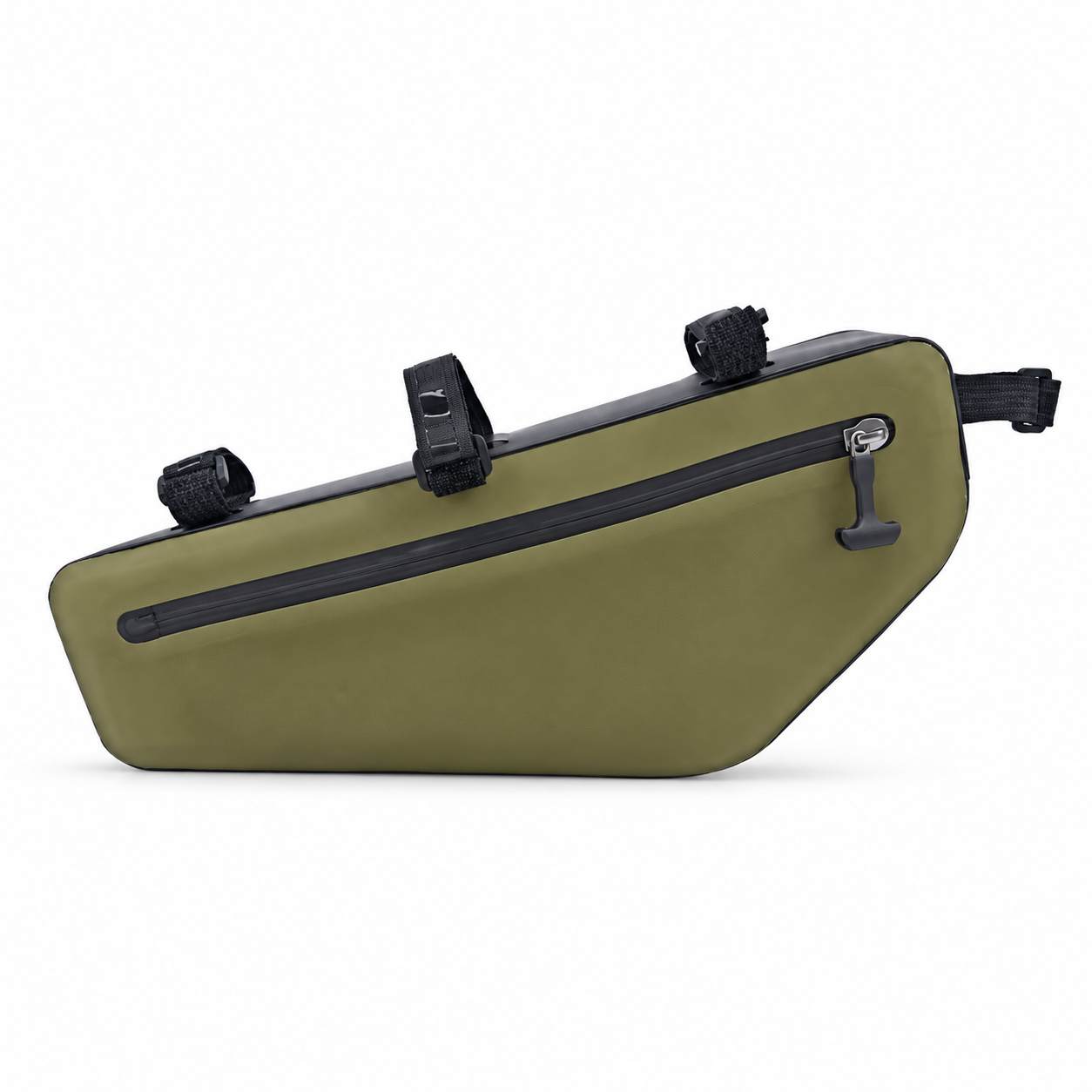
The bicycle frame-bag reference is a starting product direction. Its photographed outline does not establish compatibility with an unmeasured bicycle.
Draw the clear envelope, not only the tube-to-tube triangle
Record the usable boundary for the selected configuration and mark areas reserved for access or movement. A template that follows only the apparent tube edges can omit an accessory or a feature that occupies part of the available space. Ask the responsible reviewer to identify relevant clearance requirements rather than assuming the entire visible triangle is usable.
Show the proposed bag outline and the reference points separately. Include the opening position, expected contents and how those contents should be reached. If the design uses a proposed gusset or another depth feature, identify its intended envelope in a second view instead of leaving it hidden in a flat side drawing.
Give the template a revision and frame identity. Keep its scale and units visible whether it is supplied digitally or as a physical pattern. Do not ask a supplier to infer exact dimensions from a perspective photograph.
If a digital template is printed for review, include a check dimension that can be measured on the print. Confirm that it has not been altered by a fit-to-page setting before using the paper outline. Keep that print check separate from the physical frame measurements that establish the original geometry.
Build a strap-position and interference record
| Template area | Information to mark | Review question |
|---|---|---|
| Main outline | Measured references, usable boundary and proposed body shape. | Which exact frame configuration does the outline describe? |
| Depth envelope | Proposed packed outline in a second view. | What surrounding access or movement must remain available? |
| Strap positions | Proposed attachment locations and components that remain fitted. | Can the planned route be reviewed without assuming an empty frame? |
| Opening | Closure position and intended access to the contents. | Which parts must move during loading or retrieval? |
| Variant identity | Frame size, configuration and template revision. | Does another size need its own measured record? |
Compare the template with a sample and the intended contents
Ask for the proposed bag outline and attachment positions to be reviewed against the template before treating a prototype as representative of a whole frame range. Identify the contents used to show the packed shape and record the access sequence with the relevant accessories in place.
If an observation requires a change, mark the affected boundary or strap location on the current drawing. State whether the change concerns the frame interface, the bag body or the supplied attachment set. A general comment such as “make it fit better” does not tell the next reviewer which dimension or interaction needs attention.
The B2B RFQ template helps organize commercial information. Attach the frame-fit record so a waterproof bike frame bag manufacturer can quote against an identifiable interface rather than a broad bicycle category.
Illustrative family: one visual design for two frame sizes
A buyer proposes a shared graphic direction for two frame sizes. This example describes a planning process, not a claim that one bag fits both bicycles. The buyer supplies two measured templates with separate frame and accessory identities.
The proposed body outlines and strap positions are reviewed independently while the artwork retains a common design direction. A change to the top opening on one variant is recorded on that variant's drawing; it does not silently alter the other template. Packed-view photographs use the contents agreed for each review.
The buyer can then decide whether to develop two configurations or narrow the intended frame coverage. The chosen scope should be reflected in the order identifiers and product information rather than hidden behind the phrase “universal frame bag.”
Hand off a dimensioned interface and a clear product scope
Send the selected direction from the waterproof bicycle bag collection, dimensioned templates, reference photographs, proposed contents and attachment questions. Identify the frame configurations included in the development brief and those still awaiting measurements.
The release pack should connect frame identity, template revision, bag revision, attachment positions and accepted observations. Keep a record of any assumptions that still require confirmation. For wholesale waterproof bike frame bags, that is a practical way to preserve the intended product scope and avoid converting one approved sample outline into an unsupported fit statement for an entire bicycle range.
Discuss the selected model and purchasing brief
Send the model references, quantity split and the decision record described in this guide. Add your artwork, packing requirements, destination and required delivery date.
Request a project quotationEmail michael@outdoorsbloom.com or denggaoz@gmail.com.