
The short answer
For OEM waterproof bicycle bags, specify what the bag must retain under its intended load before requesting a stiffener. A panel may influence the body shape, attachment position, opening access and packed dimensions. Ask the supplier to identify whether support is fixed, removable or provided by another construction. Review the selected assembly rather than approving a separate panel by appearance. Keep material, fit and any required performance evaluation as distinct approval items.
Describe the shape problem before requesting a panel
“Add a stiffener” leaves a supplier to decide which part of a bicycle bag needs support and why. The actual concern may be a side wall that moves toward an obstruction, a pocket that collapses during access, or an attachment area that changes shape when loaded. These are different development problems and may require different solutions.
Begin an OEM waterproof bicycle bag brief by describing the intended contents and installed arrangement. Mark the area that should retain shape, the space it must leave clear and the access operation it must permit. Ask the supplier to explain the proposed construction. This keeps the discussion open to a suitable panel or another support arrangement without assuming the photographed reference already contains one.
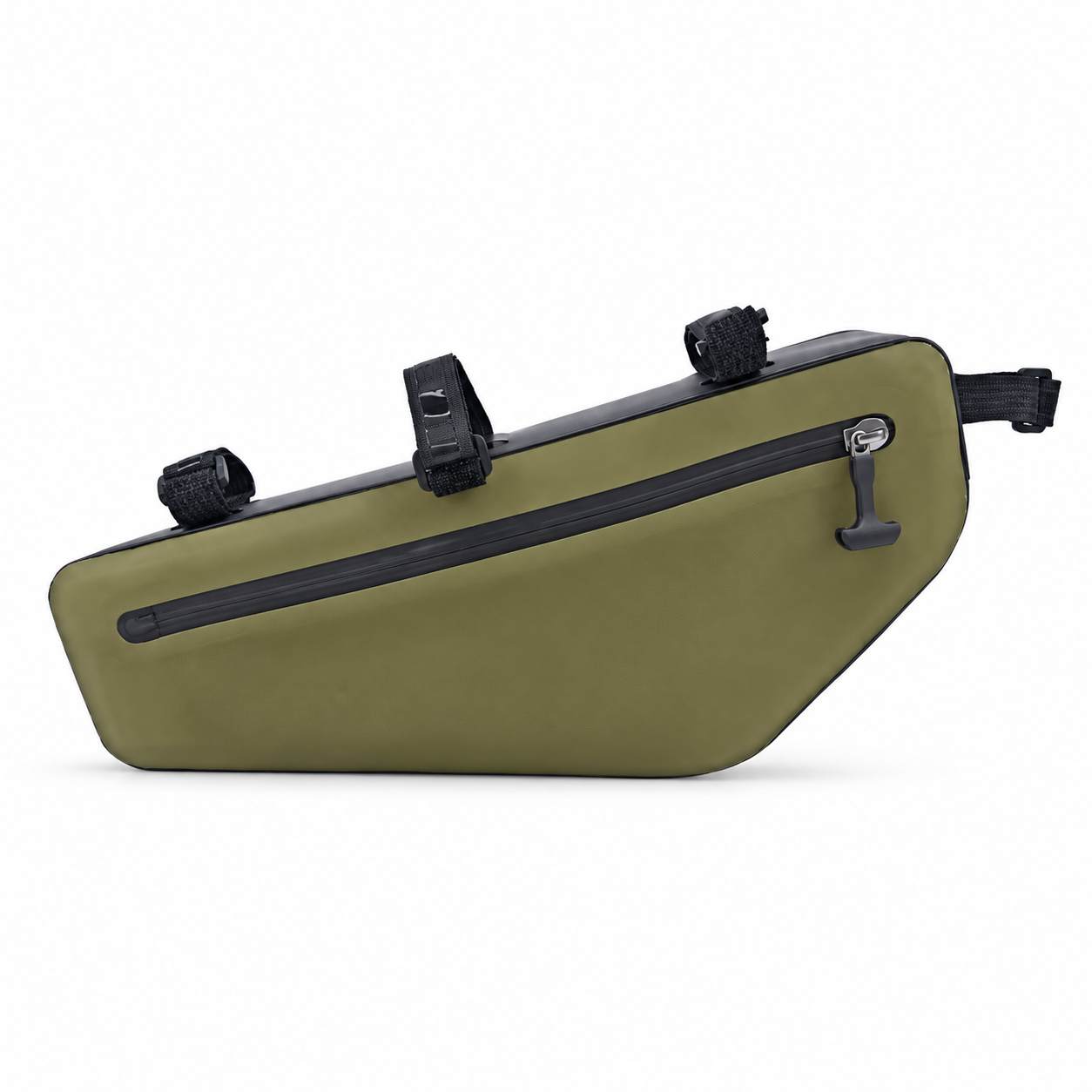
Compare the bicycle frame-bag reference and the commuter pannier reference through the bicycle bag collection. Their names and photographs establish starting formats, not an internal support specification.
Compare the consequences of a support arrangement
Ask which part is supported and how that support is retained in the finished bag. A proposed removable panel needs an insertion path and a clear supplied-set description. A fixed arrangement needs an agreed assembly method and review of any effect on the body or storage space. Neither option is automatically preferable; the purchasing decision depends on installation, storage and the user's access needs.
| Option or question | Potential benefit to review | Trade-off to confirm |
|---|---|---|
| Removable support | Separation of the support from the soft body where the design permits it | Insertion access, orientation, retention and separate packing |
| Fixed support | A defined support position within the assembly | Folded dimensions, assembly details and replacement scope |
| Local support area | Support concentrated near a particular contact or attachment | Transition edges and the unsupported surrounding body |
| Alternative construction | A supplier proposal addressing the same shape requirement | Which requirement changes and how the result will be reviewed |
The table is a discussion structure. It does not state that each option is available for every existing model.
Map the interfaces that can change the result
A panel is part of an assembly. Identify contact with the outer shell, lining, attachment fittings and pocket edges. Mark the panel outline relative to these features on the drawing. Ask how its edges are finished or separated from adjacent surfaces and how its position is controlled after packing.
Review the installed bag with representative contents. A proposed support might preserve one wall while changing usable space or moving another part of the body. Check the opening and any exterior storage in the same configuration. If a mounting fastener or retaining component changes, record that revision as well as the panel change; otherwise later reviewers may attribute an improvement to the wrong component.
Make folding and shipment part of the comparison
Support can change how a soft bag is stored and packed. State whether the buyer intends to fold the body, remove a component or retain the assembled shape between uses. Request the proposed packing sequence and the dimensions of the packed unit. Do not calculate freight needs from the flat pattern or the unsupported shell alone.
Where a support is supplied separately, the specification should identify its orientation, retention parts and any instructions needed for assembly. Where it remains fitted, review the proposed folding arrangement for unwanted contact or distortion. This discussion belongs beside the carton-planning brief, because two bags with the same nominal capacity may have different packed envelopes.
Illustrative brief: keeping an installed side panel clear
Consider a hypothetical custom bicycle-bag project in which the buyer wants a loaded side wall to retain a defined clearance from the bicycle structure. The drawing marks the affected area and the intended contents. The buyer asks for a supplier proposal comparing a removable support with a fixed arrangement, including the consequences for access and folded packing.
The sample review uses the same contents and attachment setup for both proposals. The observation sheet records body position, storage access, support retention and the packed unit after the agreed folding sequence. No material grade or thickness is declared acceptable before the assembly is reviewed. A proposal that changes the attachment position is identified as a different configuration rather than described as the same sample with a new panel.
Release a construction record that can be repeated
The handoff should contain the support requirement, accepted drawing, proposed material description, attachment interfaces and sample revision. Include photographs of the panel or support arrangement before it is concealed, where appropriate, and photographs of the completed loaded bag. Specify which parts belong in the retail unit and which observations remain unresolved.
Use the material specification guide to keep material naming separate from finished construction. Follow the sample approval process for the accepted assembly. A future change to the support, retention detail or packing sequence should be reviewed against the original shape requirement, not accepted merely because the replacement looks similar.
Discuss the selected model and purchasing brief
Send the model references, quantity split and the decision record described in this guide. Add your artwork, packing requirements, destination and required delivery date.
Request a project quotationEmail michael@outdoorsbloom.com or denggaoz@gmail.com.