
The short answer
For custom waterproof golf bags, provide the intended club set as a measured equipment envelope and a proposed top-layout drawing. Define divider locations, required clearances and what the dividers are intended to separate. Allocate accessories to named pockets and review access with the bag in its intended position. Confirm the body shell, pockets and closures separately. A top-view photograph is useful, but it cannot establish internal divider depth, usable space or complete-product protection.
Start with the equipment set rather than a divider count
A request for a particular number of dividers does not explain the equipment they must organise. The intended club set, grip envelopes and preferred access pattern influence how a top layout should be reviewed. A custom waterproof golf bag brief should describe those requirements before selecting a top appearance from a photograph.
Ask the buyer to identify the representative equipment used for sampling and record the relevant envelopes. If the range serves more than one equipment set, mark which set defines the initial layout and which variants remain to be checked. Keep the drawing and equipment record together so a later sample is not reviewed against a different set without anyone noticing.
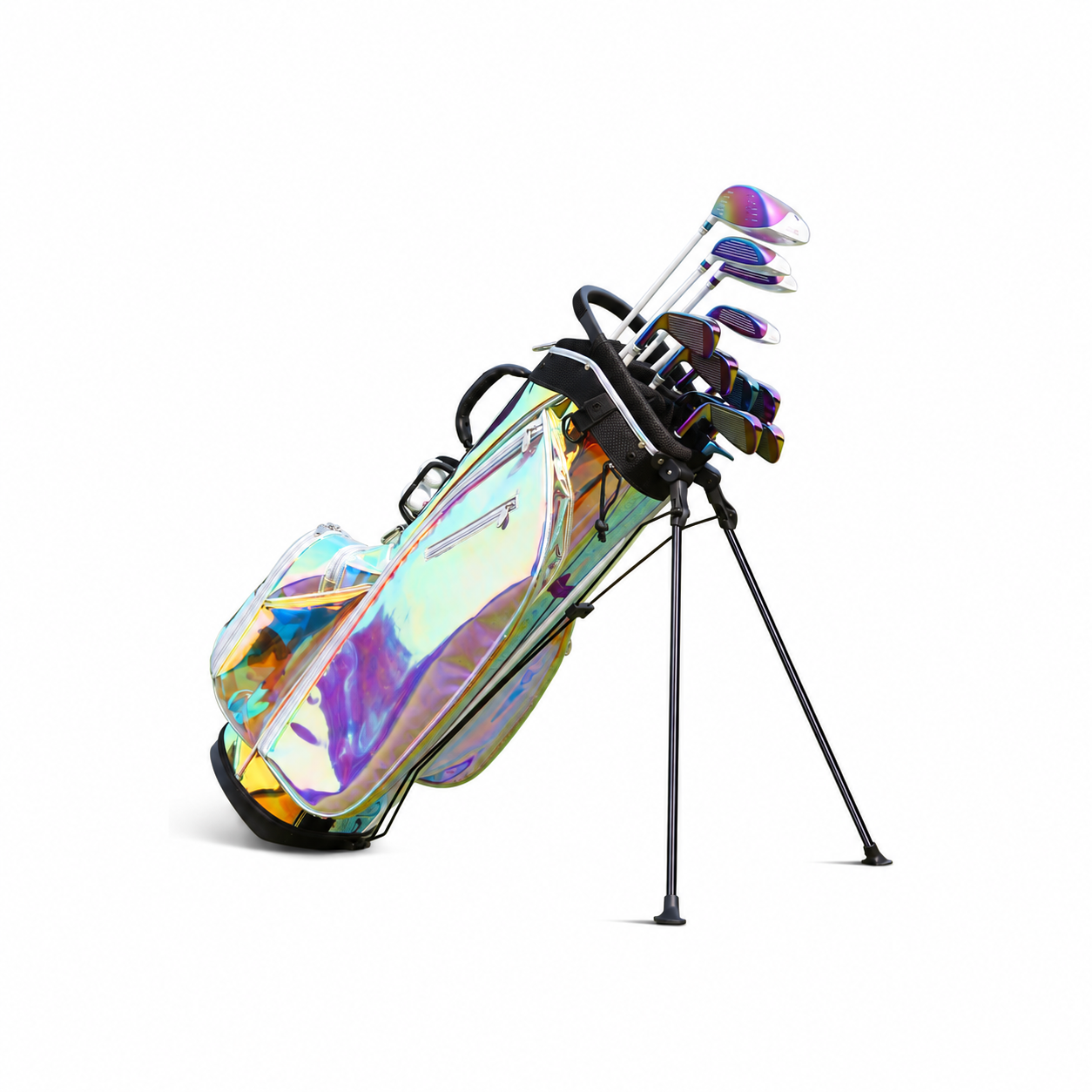
The waterproof golf bag collection includes the QB063 stand-bag reference and a pencil stand-bag reference. Use them to discuss format and appearance; confirm the internal layout for the selected configuration.
Draw the top and explain what each divider does
Provide a top-view drawing with named sections and a consistent orientation. Mark the handle, carrying side and any other fixed reference used to locate the dividers. Then state the purpose of each separation: organising a group of items, controlling their positions or preserving an access path. These descriptions make the drawing more useful than a divider count by itself.
| Drawing field | Information to supply | Sample observation |
|---|---|---|
| Equipment reference | The representative set and relevant item envelopes | Which items were used in the loaded review |
| Top opening | Measured outline and orientation to the carrying side | Insertion and removal through the actual opening |
| Divider arrangement | Locations and the intended separation function | Whether the loaded arrangement provides that separation |
| Internal extent | The proposed divider depth and construction for review | What the completed sample contains below the visible top |
Ask the supplier to identify any change between the visible top design and the proposed internal assembly. Do not assume that a line visible at the opening continues through the full body.
Allocate accessory contents to named pockets
Write a pocket-content schedule alongside the top layout. Identify what needs separate access, which items should remain together and whether a pocket must be usable while the bag is being carried or standing in its intended position. A pocket described only as “large” is difficult to compare across quotations.
Mark the opening direction and the space required to operate each closure. Review interaction with handles, straps and other pockets when loaded. If a customer expects a particular protection level for an accessory pocket, write that requirement separately from the body shell. Material appearance and the phrase waterproof golf bag do not define every compartment's construction or evaluation scope.
Review access in the assembled configuration
A flat drawing can establish layout intent, but access depends on the completed assembly. Record the equipment used, the bag orientation and any carrying or standing configuration relevant to the review. Observe insertion, removal, closure operation and pocket access as separate tasks. If the equipment set changes, identify that change before interpreting the results.
Ask reviewers to describe the obstruction rather than merely marking a layout uncomfortable. For example, note whether an item catches at the top opening, contacts a divider lower in the body, or blocks access to another section. This gives the supplier a specific revision to investigate and avoids changing the entire divider arrangement for a problem caused by one interface.
Illustrative brief: one visual range with different equipment sets
A hypothetical golf retailer wants matching branding across a stand-bag format and a compact pencil format. The buyer provides separate equipment envelopes and top-layout drawings instead of scaling one layout down. Both briefs identify the carrying side and name the accessories assigned to each pocket.
The supplier is asked to mark the proposed divider locations and internal extent for each sample. Reviewers record the equipment set actually inserted, the observed access sequence and any interference with pockets or handles. The shared color and logo direction is approved separately from the two internal layouts. This example creates a coordinated range without implying that the formats carry identical equipment or have interchangeable internal constructions.
Hand over an equipment-to-compartment record
The final record should identify the selected model, equipment reference, top drawing, internal divider description and pocket-content schedule. Add photographs that show the accepted orientation and loaded arrangement. Tie open questions to individual drawing callouts so they can be closed without losing the original requirement.
Use the B2B RFQ template for the broader quantity, artwork and packing enquiry. Keep the layout drawing as a separate attachment with its own revision. Before release, reconcile the product description with the approved configuration: divider arrangement, pocket allocation and requested protection language should describe what was actually reviewed, rather than what a reference photograph suggested.
Discuss the selected model and purchasing brief
Send the model references, quantity split and the decision record described in this guide. Add your artwork, packing requirements, destination and required delivery date.
Request a project quotationEmail michael@outdoorsbloom.com or denggaoz@gmail.com.