
The short answer
Review the liner with the selected sample open and unloaded, mapping corners, joins and components that may be removed. Record how each area is reached and the proposed drying arrangement. Request care instructions for the actual material combination, keeping access observations separate from cleaner compatibility and any required compliance evidence. The output is a model-specific access sheet, not a general easy-clean or hygiene claim.
Evaluate the geometry that a user can actually reach
When comparing insulated bag manufacturers, ask how the proposed liner can be inspected, emptied and reached for cleaning. Liner material is only one part of that discussion. A wide-looking exterior can still have restricted access because of the opening, seam positions, pocket arrangement or a component that remains fixed inside.
Begin with the intended contents and expected residue: condensation, ordinary dirt or a spilled drink create different handling questions. Describe the anticipated situation without assigning a hygiene or food-contact approval to the design. If a specific compliance requirement applies to the contents or market, identify it separately for model-specific review.
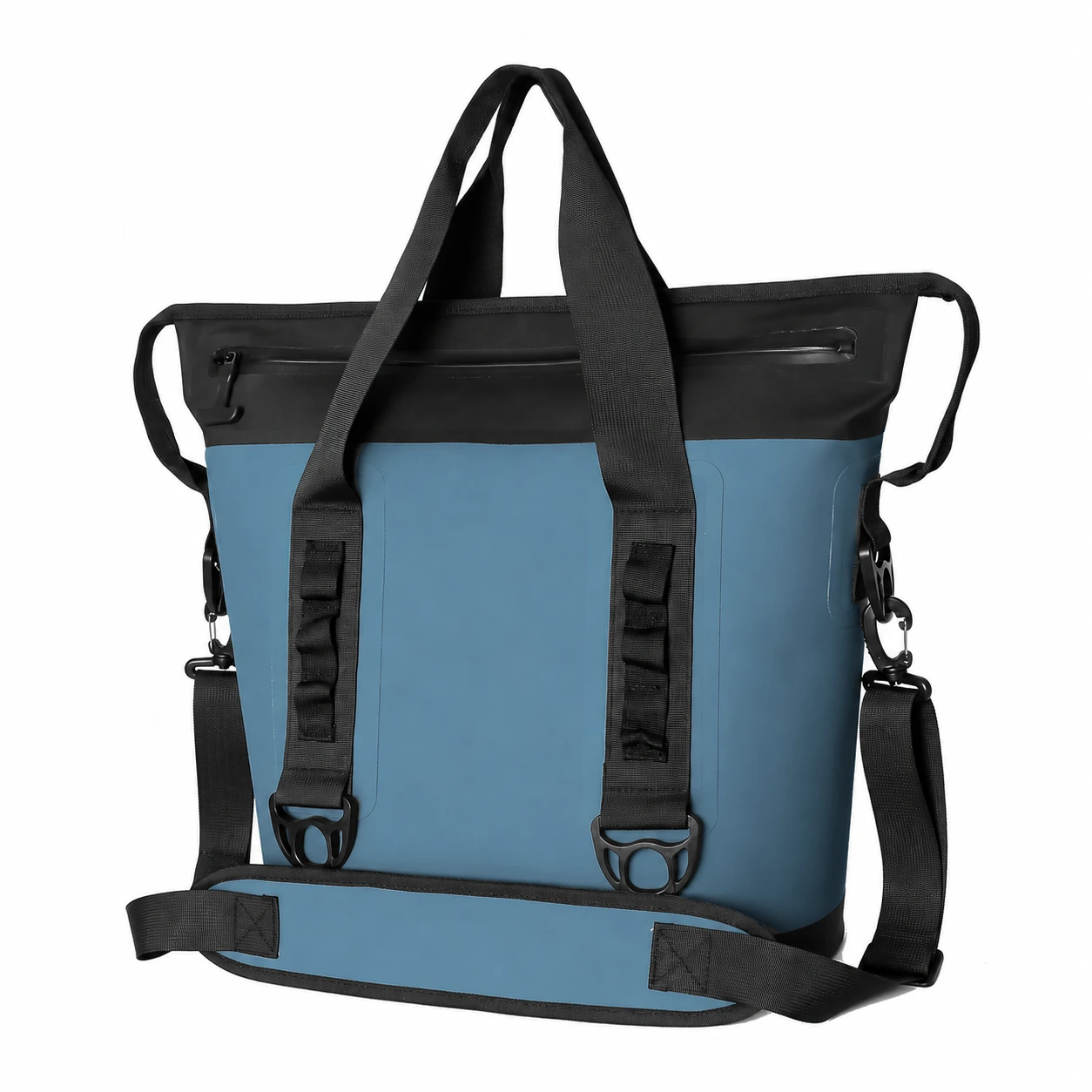
The cooler tote reference and ZY17 picnic tote reference can help compare opening and body arrangements. Request views of their selected interior configuration before drawing conclusions about access.
Map corners, joins and removable components
Make an interior access map from photographs taken with the bag open and unloaded. Label the bottom corners, side-to-base joins, opening edge and any internal attachments. Ask which areas can be turned outward, lifted or separated, and which must be reached through the normal opening.
A removable liner concept may improve access in one arrangement while adding a separate part, an attachment decision and another packing step. A fixed liner avoids that loose component but needs its own inspection of reachable areas. Neither choice should be approved from the word “removable” or “seamless” alone.
Keep material selection in the shell, liner and insulation guide. This review addresses the shape and access of the chosen construction rather than repeating a general materials comparison.
Turn access questions into an inspection sheet
| Area or component | Observation | Question before approval |
|---|---|---|
| Opening | Record its usable shape while the closure is fully open. | Can the intended cleaning access be demonstrated without forcing the opening? |
| Bottom corners | Photograph the reachable surfaces and any folds. | What handling method is recommended for these areas? |
| Liner joins | Locate visible seam lines and changes in surface level. | What inspection and care instructions apply to the selected construction? |
| Removable parts | List the parts removed and the attachment sequence. | How are they dried, reassembled and identified in the supplied set? |
| Drying position | Record the proposed open storage arrangement. | Can the relevant surfaces be left accessible under the proposed instructions? |
Request care wording for the actual material combination
Ask the cooler bag manufacturer to provide proposed cleaning instructions for the chosen liner, closure, printed areas and attachments as a complete set. Identify the cleaning products and handling conditions the intended user may encounter. Avoid approving a general instruction such as “use any household cleaner” without a material-specific review.
Covestro's TPU material guidance explains that material chemistry and exposure conditions affect behaviour. That supports asking about the selected material; it does not establish compatibility for a particular cooler liner or finished bag.
Keep cleaning access, material compatibility and any required validation as separate approval fields. A sample that is easy to reach has answered an access question. It has not automatically answered every question about a cleaning agent or an intended use.
Review the proposed care illustrations beside the open sample. If an instruction shows a liner being lifted or a component being removed, check that the depicted action matches the supplied construction. Identify parts that remain attached so the final insert does not instruct the user to separate something that was never designed for removal.
Illustrative review: a picnic tote with a proposed loose tray
Consider a buyer developing custom insulated cooler bags for a picnic collection. The proposed load includes closed food containers and a loose tray intended to organize them. This example describes a design discussion, not a confirmed feature of an existing reference.
Compare the tote first without the tray, then with the proposed tray in place. Record the exposed liner areas, the sequence for removing the tray and whether the same access remains available near the base. Ask how each part is identified in the user instructions and retail pack.
If the tray blocks a corner, the next decision might be a different tray outline, a different removal route or no tray at all. Do not solve the access problem by silently changing liner material or the main body shape; those changes belong on the revised specification.
Approve an access record, not a vague “easy-clean” claim
Send the cooler and insulated bag team the interior map, intended contents, proposed removable components and cleaning-instruction questions. Include photographs of the sample's open and drying positions so the review refers to visible geometry.
The handoff sheet should identify the model revision, liner description, attachments, agreed handling wording and open questions requiring further information. Keep separate lines for access observations, material review and any required evidence. This record gives the buyer and supplier a concrete basis for refining the design without presenting an unverified cleaning or compliance claim as a product fact.
Technical references
- Covestro TPU chemical-properties guidance: TPU chemistry and exposure conditions affect material behaviour; supports requesting a selected-material review, not a cooler compatibility or compliance claim.
Discuss the selected model and purchasing brief
Send the model references, quantity split and the decision record described in this guide. Add your artwork, packing requirements, destination and required delivery date.
Request a project quotationEmail michael@outdoorsbloom.com or denggaoz@gmail.com.