
The short answer
Define the fixture, hanging provision and desired product orientation before approving a header card. Review a small set of complete packed units, including visibility and removal, rather than one isolated empty pack. Keep outlet-specific fixture requirements and pack versions identifiable on the order schedule. The release record should connect product and pack revisions, fixture measurements, accepted mock-up photographs and receiving instructions.
Specify the shop interface before the hanging pack
For a wholesale waterproof phone pouch program, the retail display is an interface between the product pack and the shop's fixture. Start with the actual hook or hanging support, the available display space and the orientation in which the buyer wants the product to be seen. A header-card shape alone does not describe that interface.
Request measurements or a fixture sample from the intended retailer. Identify the area needed to place and remove a packed unit, including anything behind or beside it. Keep fixture information separate for different outlets rather than assuming a pack reviewed for one shop will suit every display.
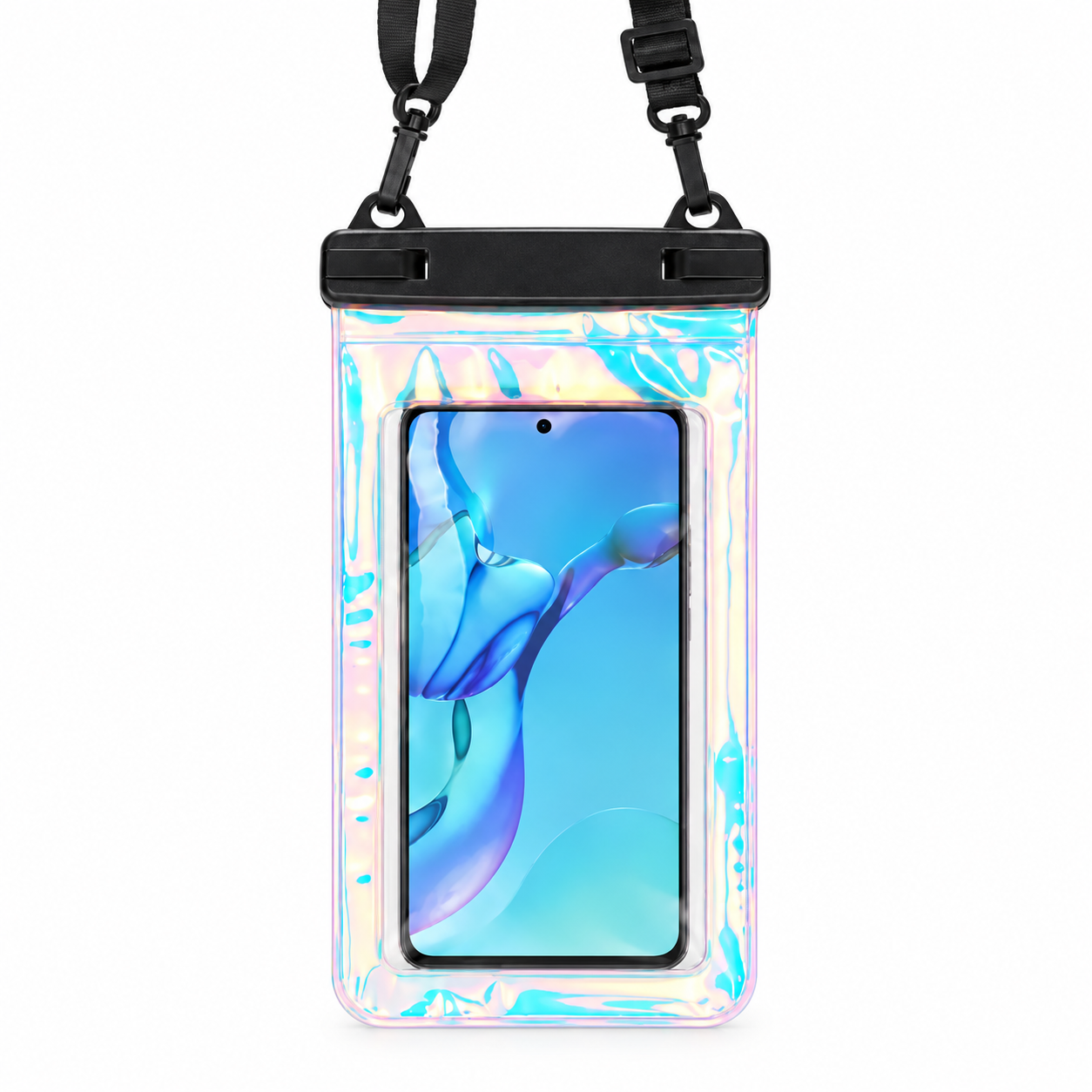
The iridescent pouch and carbon-pattern pouch can help plan visual presentation. Confirm the selected pack and hanging arrangement independently of the product photograph.
Choose what remains visible when the unit is hanging
Mark the front of the complete packed unit and the direction in which it should hang. Review the product image, model identification, color and instruction access in that orientation. If a lanyard is visible in the pack, show how it is arranged so it does not hide the feature the retailer wants customers to compare.
Define where the hanging opening sits relative to the pack's outline and contents. Ask for the proposed arrangement to be reviewed using the actual fixture or an agreed representation of it. A drawing should show reference points clearly enough for a second reviewer to repeat the placement.
Keep the product's wearing attachments separate from the retail hanging provision. A display brief should identify which part supports the packed unit at the shop rather than silently assigning that job to a product component.
Make a measurable display approval list
| Interface | Buyer input | Mock-up observation |
|---|---|---|
| Fixture | Hook or support identity and relevant measurements. | How the complete unit is placed and removed. |
| Hanging provision | Proposed opening position and pack reference points. | Whether the agreed fixture can engage it in the intended orientation. |
| Product presentation | Features, color and model information to keep visible. | Obstructions from the lanyard, artwork or adjacent packed units. |
| Receiving unit | How retail units are grouped and identified in the shipping pack. | Steps needed to transfer them from the carton to the display. |
| Customer removal | The intended selection and removal sequence. | Access to one unit without an unintended change to neighboring presentation. |
Review a small display set, not one isolated pack
A single hanging unit can look satisfactory while a row presents another question. Use the proposed grouping to review visibility and removal. Identify the number of units used in the mock-up and the fixture arrangement so photographs can be interpreted correctly.
Record the front, side and removal views. If one model is thicker or has a different lanyard arrangement, give it its own observation rather than substituting a thinner display sample. Keep the contents, insert and packaging version consistent with the unit intended for sale.
The bulk retail-packaging guide covers the complete pack specification. Add this fixture-based review to decide how the selected unit will be displayed and handled in the shop.
Illustrative display: one brand program, two outlet fixtures
A distributor proposes the same branded pouch range for two outlets whose hanging supports differ. This is a display-planning example, not a claim that a particular pack fits a retailer's fixture.
The buyer supplies fixture identities and asks for the proposed packed unit to be reviewed against both. Each mock-up uses the same product and pack revision, with photographs showing hanging orientation, visible model information and removal of one unit. The observations identify which interface questions remain open.
If one fixture needs another hanging-opening position, the buyer can propose a separate header version while retaining the common product artwork. The order allocation should then distinguish the two pack versions. A shared brand or pouch model does not remove the need to identify the retail presentation actually being supplied.
Hand off the pack, fixture and receiving record together
Send the selected models from the waterproof phone pouch collection, fixture measurements, orientation drawing and display mock-up questions with the artwork brief. Identify who will review the proposed pack using the intended shop interface.
The release record should contain product and pack revisions, fixture identity, accepted photographs, outlet allocation and receiving instructions. For bulk waterproof phone pouches, this lets the packing and distribution teams distinguish a product variant from a display-pack variant and move the correct units to the right outlet.
Where the buyer needs a hanging observation over time, agree the packed contents, fixture, duration and observations before the review. Record any change in orientation or presentation against that defined arrangement. An informal display photograph does not establish an unspecified hanging-strength result, and the chosen review should not be broadened into one after approval. Keep the pack revision and fixture photographs attached to the observation record.
Discuss the selected model and purchasing brief
Send the model references, quantity split and the decision record described in this guide. Add your artwork, packing requirements, destination and required delivery date.
Request a project quotationEmail michael@outdoorsbloom.com or denggaoz@gmail.com.