
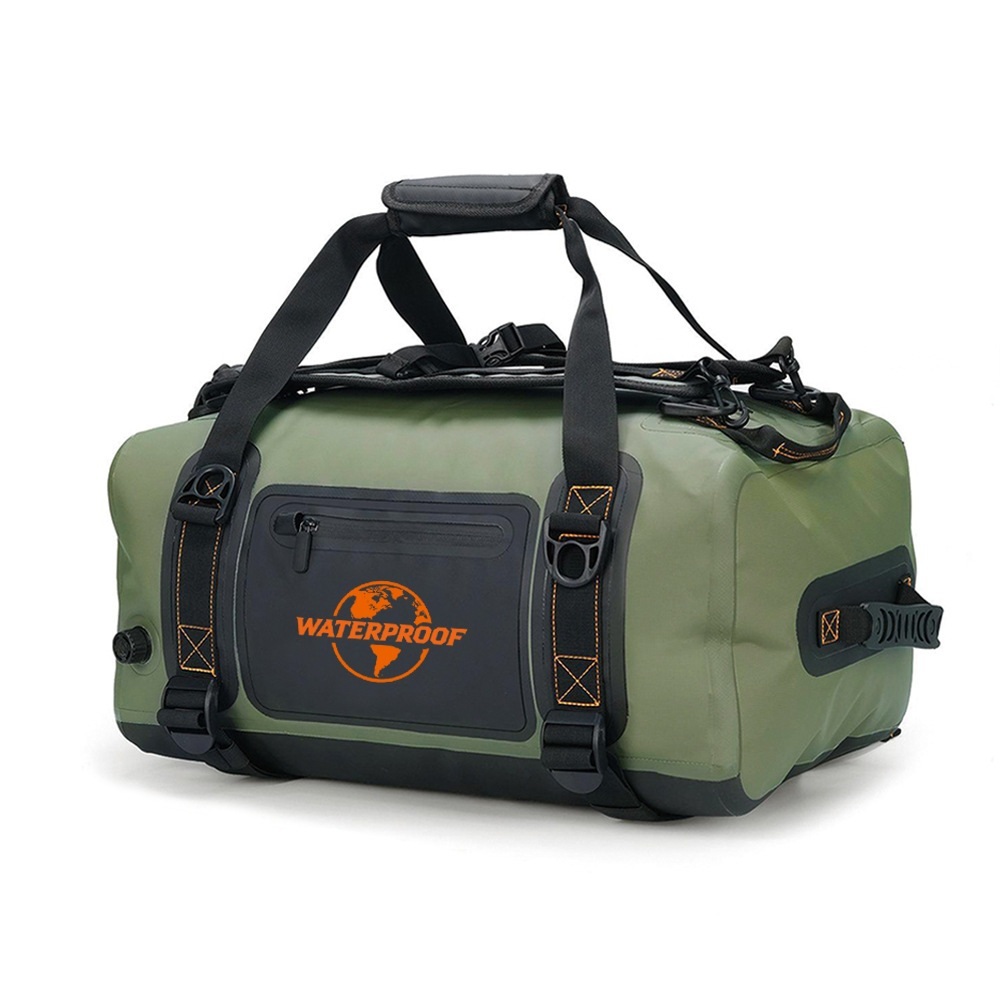
The short answer
Measure the actual equipment envelope, including cases and protrusions, then review how it passes through the proposed opening. Test the intended loading sequence, correct closing and extraction while other contents remain packed. Keep the support position and strap arrangement consistent in the trial. The output is an access brief with repeatable views and identified obstructions; a larger nominal capacity alone does not confirm that the intended load can be packed or retrieved conveniently.
Start with the object that must pass through the opening
Custom waterproof duffel bags can have ample internal space yet still be inconvenient to pack. A rigid container, long item or grouped equipment set must pass through the opening and be positioned inside without obstructing the closing sequence. Nominal capacity does not describe that path. Define the load envelope and the way it will be inserted before settling the bag dimensions.
List the largest rigid objects separately from compressible contents. Identify items that must remain grouped and those that can be packed in sequence. Include the packaging, cases or protective covers that will be present in actual use. Measuring an uncovered item and then testing it in a larger case can produce a misleading comparison.
The motorcycle bag and duffel collection offers different reference layouts, but the suitable opening must still be reviewed against the intended contents.
Describe the insertion path and the extraction task
Consider how the bag is supported during packing. A duffel on a bench, secured to equipment or standing on the ground can present a different access task. State whether the intended contents should be removed while other items remain packed. The opening may need to support more than the initial loading sequence.
Identify the full usable opening, including the areas constrained by corners, closure components or carry attachments. Avoid treating an exterior mouth measurement as the same thing as a clear opening. Ask the supplier how the selected closing arrangement changes the space available near the top when the bag is loaded correctly. Record the condition used for every measurement or photograph.
Compare access requirements in a trial matrix
| Trial | Information to record | Decision it supports |
|---|---|---|
| Largest-object insertion | Object identity, case dimensions and insertion orientation. | Whether the proposed opening accommodates the actual packed object. |
| Sequential packing | Which items enter first and which need to remain accessible. | Whether the layout suits the buyer's packing routine. |
| Correct closing | Contents position and the agreed closing sequence. | Whether the load leaves enough closure allowance. |
| Mid-use extraction | Item removed, bag support and surrounding contents. | Whether access requires unloading the entire bag. |
| Strap and handle interference | Any carry or attachment component crossing the opening. | Which component positions need a drawing or sample revision. |
Keep the trial observations separate from any water-exposure evaluation. A convenient opening is an access result; it does not establish a waterproof rating for the completed bag.
Illustrative brief: a rigid equipment case plus soft items
This example is a proposed packing trial, not a compatibility claim for a listed product. A buyer wants a duffel to hold one rigid equipment case, a folded textile kit and small accessories. The case dimensions include its handles and any protruding fasteners. The buyer identifies the case as the first item to insert and the accessories as items that must be reachable afterwards.
The team uses the convertible motorcycle duffel reference to explain the desired overall format, then asks for a sample review with the actual load or an agreed dimensional substitute. A larger body alone is not accepted as the answer if the opening still obstructs the case. Any revised mouth or attachment layout is recorded against the drawing and sample revision.
Review access together with the carrying format
How a bag is moved can affect its access requirements. A wheeled reference may need to be laid down for packing, while a hand-carried or mounted duffel may be opened in a different position. For a wheeled waterproof duffel reference, include the wheel and handle envelope in the proposed handling discussion. Do not assume that all large duffels behave as the same shape.
If exterior straps are intended to control the packed body, explain when they are tightened relative to closing the main opening. Ask which handles or attachment points remain usable with the intended load. A sample trial should reveal whether the packing sequence, closing sequence and carry arrangement work together, rather than checking each on an empty bag in isolation.
Release an access brief with repeatable views
Hand off the object list, measured envelopes, intended packing order and support condition. Add photographs or sketches of the insertion orientation and the contents near the opening before closing. Record any obstruction and the requested change, identifying whether it concerns the body, opening, components or packing sequence.
Use the capacity planning guide for the wider range decision. The access brief supplies a different requirement: whether the intended items can be loaded, closed and retrieved in the expected way. Keep the accepted trial configuration with the product record so a later material, closure or attachment change prompts the relevant access review.
Discuss the selected model and purchasing brief
Send the model references, quantity split and the decision record described in this guide. Add your artwork, packing requirements, destination and required delivery date.
Request a project quotationEmail michael@outdoorsbloom.com or denggaoz@gmail.com.