
The short answer
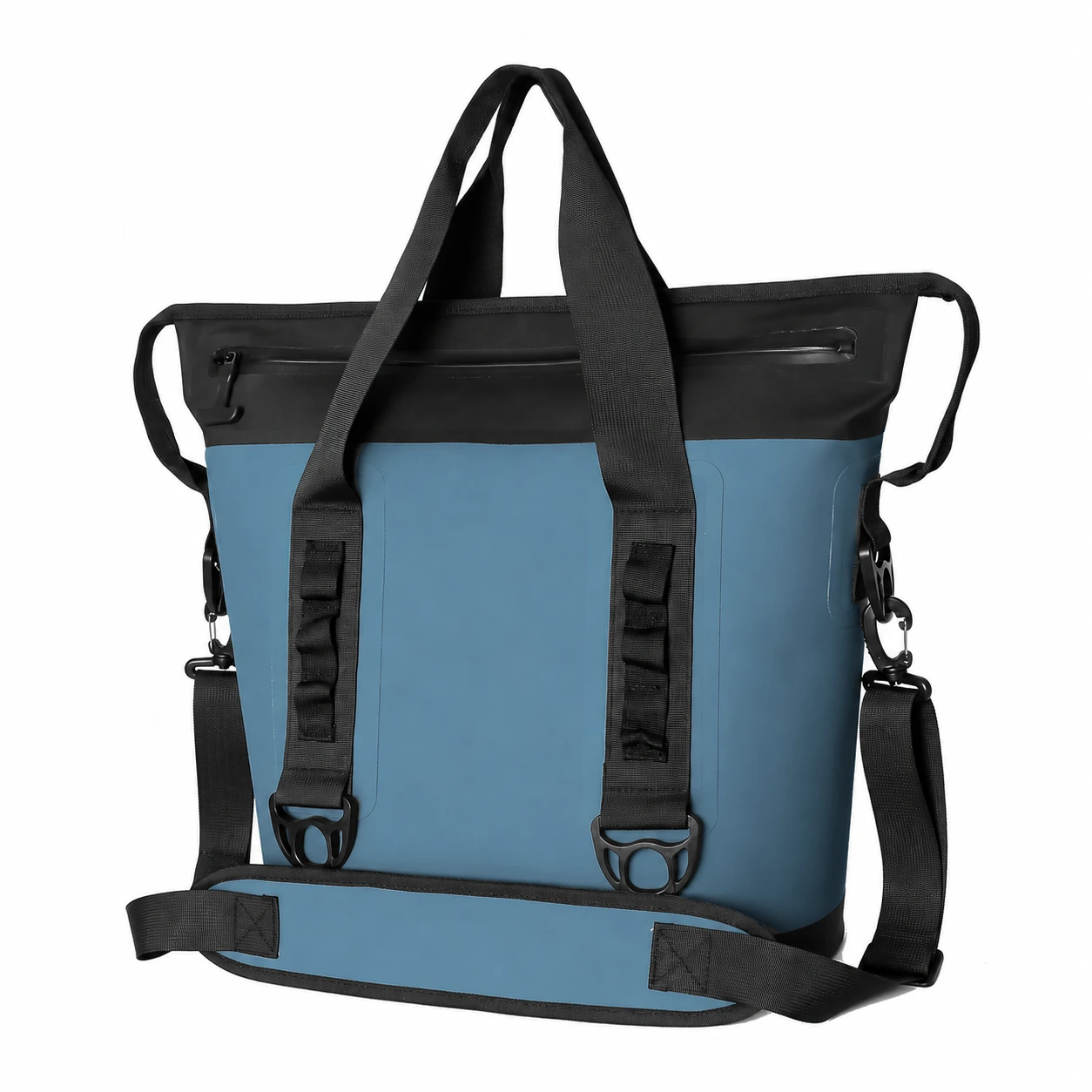
A tote brief should describe the packed-content envelope, useful opening, handle landmarks and intended carrying situations. Identify fixed and loose components, then review access and closing with the actual load. Keep insulated and non-insulated project requirements distinct; photographed cooler totes are carrying-format references, not proof of a new tote specification. Hand off front, side and opening views linked to the sample revision, with explicit decisions about the handle and strap arrangement.
Define the tote format before specifying the handle
A waterproof tote bag manufacturer needs to understand how the contents enter the bag and how the packed unit will be moved. “Tote handles” alone does not describe either task. A short hand-carry loop, a longer handle arrangement and a separate shoulder strap can lead to different opening access, body movement and storage requirements.
Start by identifying the type of project. An insulated tote includes a shell, liner and insulation brief that a non-insulated carry bag may not share. The 25L TPU insulated cooler tote and YT102 shoulder-carry cooler tote are photographed references for carrying-format discussions. They do not establish a stock specification for a new non-insulated waterproof tote.
Use the custom waterproof bag collection to explain the desired direction, then record which aspects of the reference are relevant to your proposal.
Measure handle clearance from identified landmarks
State where a handle begins and ends, how its clear opening is measured, and the bag condition used for the view. A handle-drop measurement should have an identifiable start point. The buyer also needs to know whether the handle can move away from the opening when packing and whether any strap crosses the closure path.
Describe the intended carrying situation rather than assuming one handle arrangement suits every user. A customer may lift the bag from a storage shelf, carry it at their side or use a shoulder strap. Clothing, packed contents and the way the body changes when full can affect the review. These are sample questions to evaluate with the selected configuration, not reasons to claim a universal comfort or load result.
Connect the geometry to a useful packed trial
| Area | Information to provide | Sample question |
|---|---|---|
| Opening envelope | Largest packed container and its insertion orientation. | Can it pass through the useful opening without displacing the closure? |
| Hand-carry handles | Desired pickup position and clear handle space. | Can the packed unit be lifted in the intended way? |
| Shoulder arrangement | Whether shoulder carry is required and which components are supplied. | How do the strap path and body position affect access? |
| Handle storage | Where unused handles or straps should sit. | Do they obstruct the opening or snag during packing? |
| Retail and transit packing | How the tote and carry components are presented or folded. | Can the unit be unpacked and identified without losing accessories? |
Agree the actual review conditions and any evaluation requirements. A dimensioned handle drawing does not by itself confirm carrying strength or finished-bag water protection.
Illustrative brief: a boxed-content tote for a private-label range
This example describes a new-project brief, not an available product specification. A buyer wants to carry a rectangular boxed set and a small accessory pouch. The box envelope includes its outer packaging. The buyer identifies hand carry as essential and asks the supplier to review an optional shoulder-carry arrangement. The proposal also states whether insulation is required; that question is resolved before comparing the tote references.
The sample review starts with the handles moved out of the opening. After the contents are loaded, the team follows the agreed closing sequence and checks the carrying configuration. If the handles pull across the access path, the issue is recorded against their position or length rather than simply increasing the bag's nominal capacity. Any altered geometry returns to the drawing and quotation for review.
Review the complete carrying set, including loose components
Identify which handles are fixed and which straps, pads or fittings are supplied separately. Check the relationship between the body attachment, webbing and hardware reference. The purchase brief should make it possible to distinguish a body change from a different supplied strap. This matters when samples circulate between design, purchasing and sales teams.
Keep the intended contents consistent when comparing alternatives. An empty tote may hang differently from a packed one, and an accessory case can change where the body rests. Record the observation and requested adjustment without inventing an ergonomic limit. If the design includes different sizes, identify which handle and attachment dimensions remain common and which require separate review.
Release a geometry sheet and a packed-unit reference
The handoff should contain front, side and opening views; body and handle landmarks; the packed-content envelope; supplied carry components; and the closing condition. Link the photographs to the model and sample revision. Mark whether the approval concerns appearance, access, carrying arrangement or another agreed requirement.
The insulated tote order guide covers the wider packing and production brief for insulated formats. Keep those requirements separate from the tote geometry decision. A clear handle and opening sheet allows a supplier to quote the selected carry arrangement, while preventing a familiar-looking tote photograph from becoming an assumed construction specification.
Discuss the selected model and purchasing brief
Send the model references, quantity split and the decision record described in this guide. Add your artwork, packing requirements, destination and required delivery date.
Request a project quotationEmail michael@outdoorsbloom.com or denggaoz@gmail.com.