PVC-based options
Discuss PVC sheet and coated or reinforced fabric options for your design.
Specify: reinforcement, thickness, finish and color.
MATERIALS & COMPONENTS / OEM DEVELOPMENT
Build your waterproof bag around its intended use. Explore fabric finishes, closure options and functional components, then confirm the details with physical samples.
Discuss your material brief01 / THE MATERIAL FOUNDATION
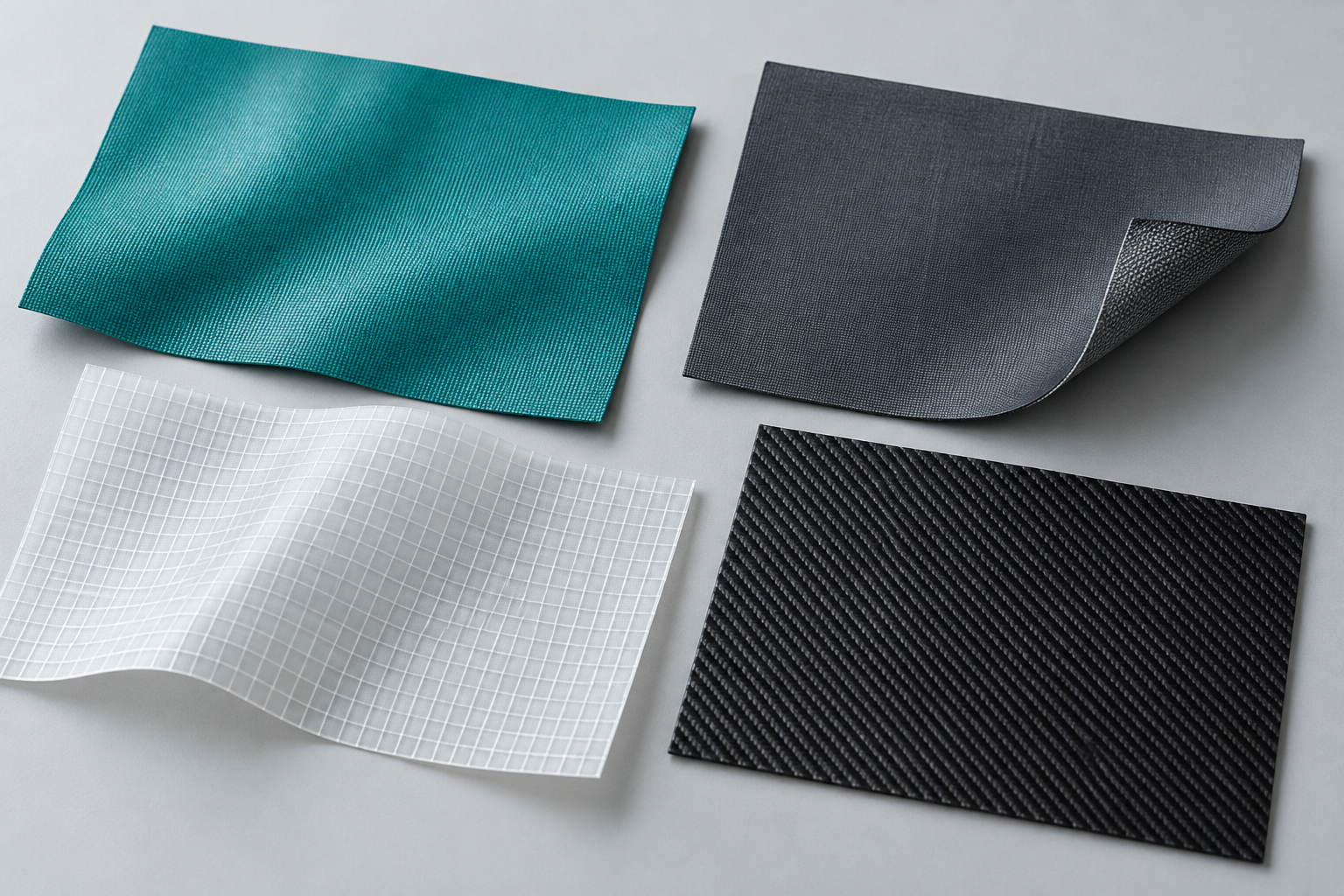
Your drawing, reference sample and intended use help define the base fabric, coating or film, thickness, surface finish and construction requirements.
Discuss PVC sheet and coated or reinforced fabric options for your design.
Specify: reinforcement, thickness, finish and color.
Review film or laminated fabric choices against the product structure and sample brief.
Specify: substrate, laminate construction and hand feel.
Define the nylon or polyester base and the required coating instead of relying on fabric appearance alone.
Specify: weave, fabric weight, coating and reverse finish.
Material availability and suitability are confirmed during quotation and sampling. No performance rating is implied by these illustrations.
02 / FUNCTIONAL COMPONENTS
Match each component to the bag design, carrying method and closure requirements.
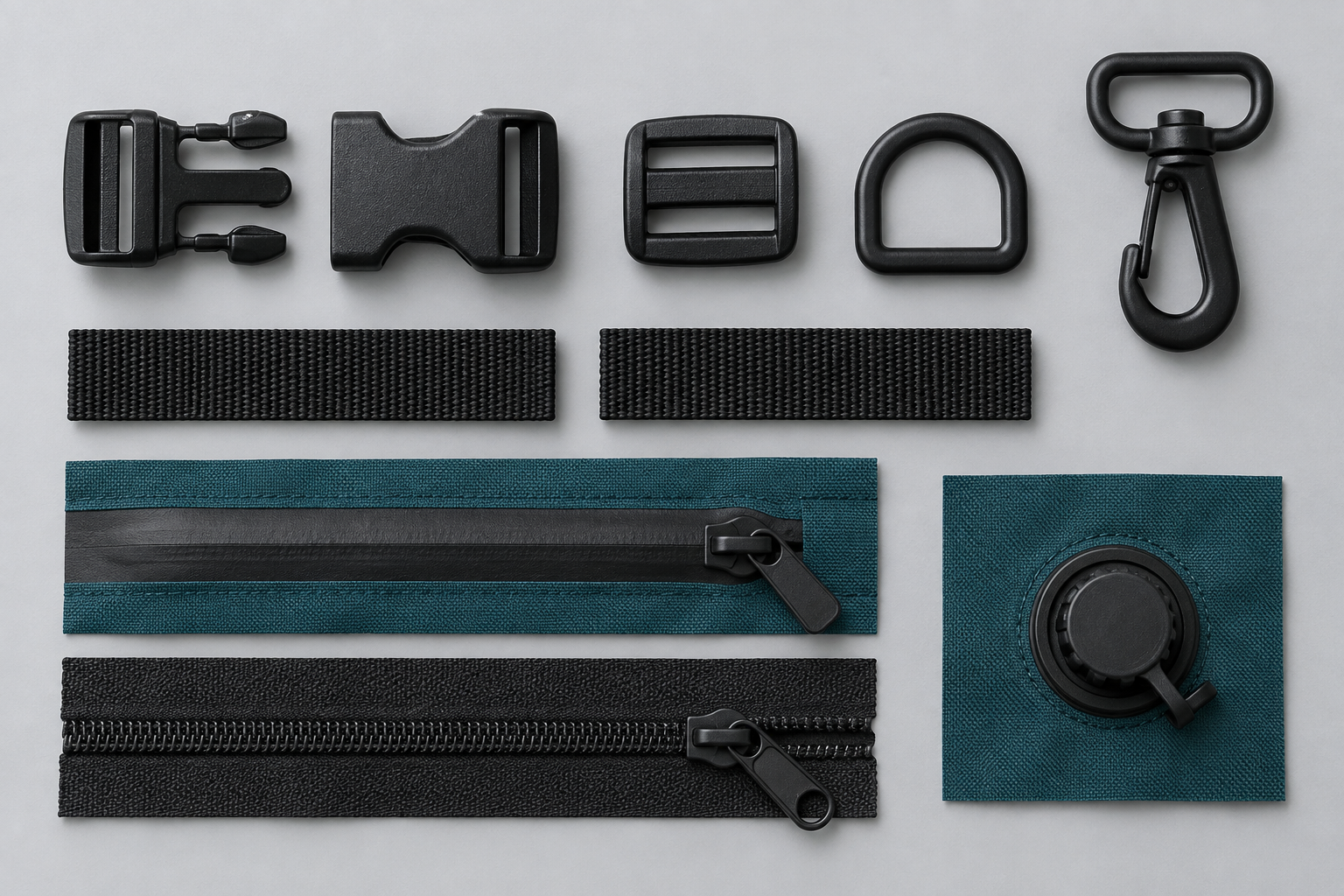
Define opening size, slider arrangement and the required water or air retention performance. A coated zipper appearance alone does not establish a waterproof or airtight rating.
Confirm strap width, adjustment range, buckle pairing, attachment positions and any load requirements in the sample brief.
Where the design needs a valve, agree its purpose, placement, cap access and interface with the bag before sampling.
Review logo artwork, print position, woven labels or patches, and packaging as part of the complete product specification.
03 / FROM REFERENCE TO APPROVED SAMPLE
Send a drawing, an existing sample or a short description. These are the details to resolve together.
| Specification | What to share | What to confirm |
|---|---|---|
| Use & bag structure | Activity, dimensions, capacity and carrying method | Panel layout, opening and attachment positions |
| Material & finish | Reference swatch, color and preferred hand feel | Composition, thickness or weight, and final finish |
| Closures & hardware | Closure preference, strap layout and functional needs | Component dimensions, fit and operation |
| Branding | Logo artwork, placement and color reference | Application method, size and sample appearance |
| Performance & acceptance | Required use conditions and any buyer test protocol | Test method, acceptance criteria and evidence required |
SAMPLE BEFORE PRODUCTION
Confirm the material swatch, component selection and finished sample together. Any waterproof, airtight or load requirement needs an agreed test scope and sample verification before it becomes a product claim.
Share your quantity, destination market and customization requirements. MOQ, sample timing, production schedule and pricing are confirmed for your project.