The short answer
Choose one model and revision before visiting dry bag manufacturers, and follow that identity through five production stops. Separate what you observe from explanations and documentary evidence. Record any unavailable operation as unobserved and assign follow-up questions to a responsible person. The useful output is a model-specific evidence log connecting material and components to the selected configuration; the visit alone does not establish a finished bag's performance or certification.
Follow one model instead of collecting unrelated factory photographs
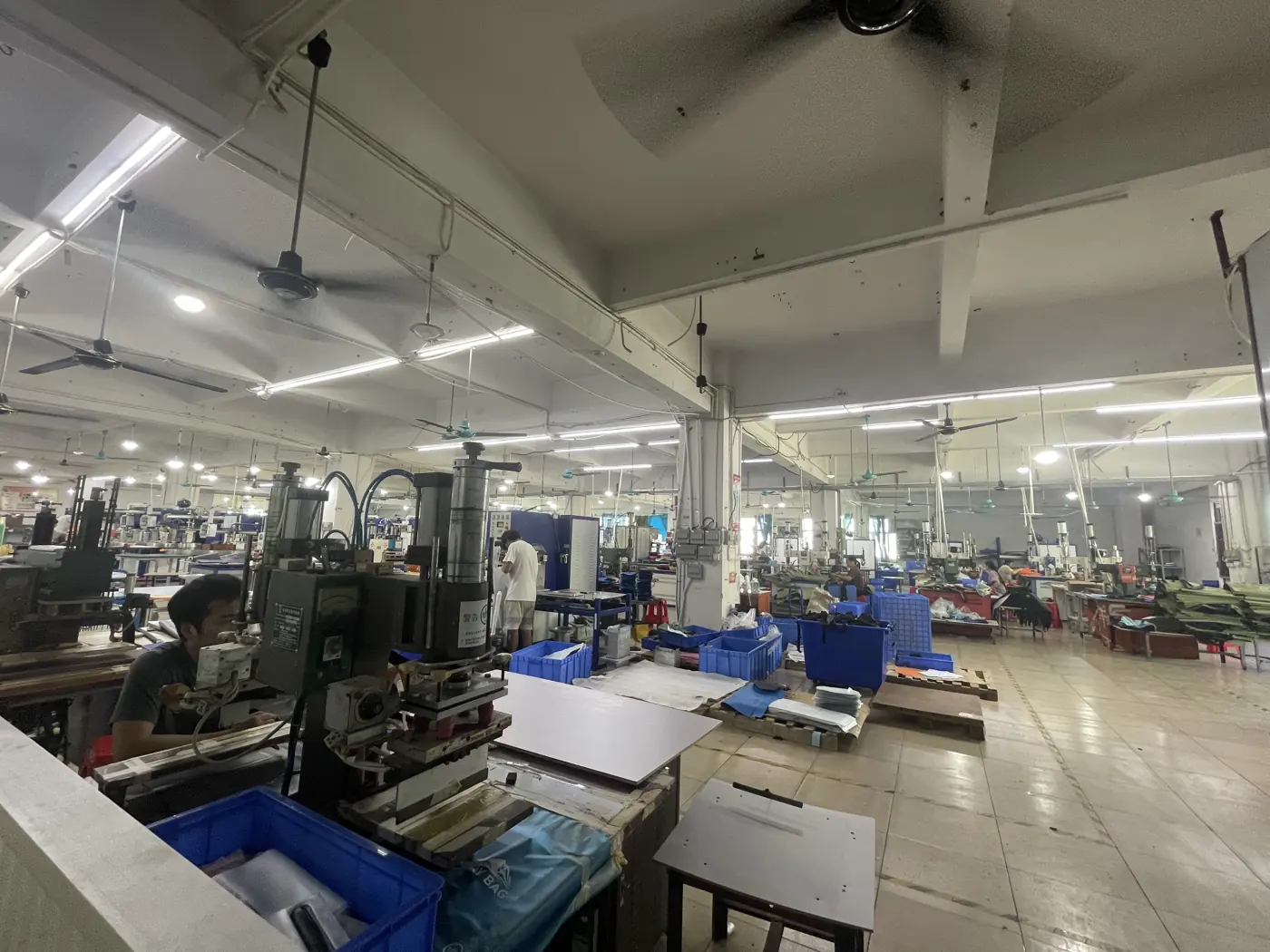
A useful visit to dry bag manufacturers follows the product you intend to buy. A room full of machinery tells you little about the quoted bag if its material, components and records cannot be connected. Before the visit, identify a reference, the requested changes and the questions that remain open. Ask the host which relevant operations will be available to observe; a process that is not running that day should be recorded as unobserved rather than assumed.
Choose a manageable route through material storage, preparation, joining, assembly and packing. Carry the same model identifier through every stop. The aim is to understand how a purchasing requirement becomes a repeatable production instruction. It is not to infer capacity, certification or finished-product performance from the appearance of a workshop.
Use the roll-top dry bag manufacturing overview to select your reference before arranging the discussion. A pocketed roll-top bag and a printed tube design raise different questions about pocket assembly and artwork alignment.
Prepare evidence requests that can be answered during the visit
Send a short agenda ahead of time. Identify the material description from the quotation, the version of the sample or drawing, and any component whose origin or specification needs clarification. Ask whether production records can be shown with other customers' information removed. This gives the host time to arrange a relevant demonstration without exposing confidential designs.
Separate evidence into three groups: what you can observe, what someone can explain, and what needs a document. Seeing a completed join is an observation. Hearing that an operation is checked is an explanation. A dated record identifying the model, revision and result is documentary evidence. Keep the categories distinct in your notes; they have different value when the buying team reviews the visit later.
Use a five-stop model trail
| Stop | Connection to the selected bag | Record to request |
|---|---|---|
| Material storage | Which identified stock corresponds to the quoted body and trim? | Material reference and any lot or receiving identification used. |
| Preparation | How are the selected panels and artwork versions distinguished? | Drawing or preparation revision linked to the model. |
| Joining | Which joins belong to the main enclosure, pockets and attachments? | Join-layout reference and the agreed review points. |
| Assembly | How are closure, straps and hardware matched to the approved configuration? | Component references and handling of proposed substitutions. |
| Packing | How does the packed unit retain its model and color identity? | Pack reference, carton identification and quantity records. |
Do not turn this table into a numerical score simply to make suppliers look comparable. Record the specific answer, its evidence and its relevance to your order. A missing answer may require follow-up rather than an immediate conclusion about the entire business.
Illustrative walkthrough: a printed tube bag with a changed carry strap
This is a planning example, not a report of an actual factory audit. A buyer selects the Printed Tube Dry Bag reference and requests different artwork plus a revised carry strap. The visit therefore needs to connect the printed material, artwork revision, strap reference and finished assembly. Looking only at another unprinted roll-top bag would leave the requested changes unexplained.
At preparation, the buyer asks how the approved pattern direction is communicated. At assembly, the buyer compares the requested strap configuration with the reference record. At packing, the buyer checks how the revised item will be distinguished from the earlier version. Any requirement not demonstrated is added to an open-action list, with a named owner and the evidence needed to close it.
Record practical limitations and protect other customers' information
Work with the host's access and photography arrangements. Ask before photographing drawings, screens, labels or other customers' goods. A useful record can often show the relevant operation without showing a complete customer design. Where photographs are unavailable, write an identifiable description and request a suitable redacted record.
Record the date, what was running, who explained the process and whether the observation concerned your selected model or another example. A demonstration on a different construction can help explain a process, but it does not establish that the quoted construction has been produced or evaluated in the same way. Keep follow-up requests tied to the actual purchasing decision.
Hand off an evidence log the buying team can use
Finish with a five-stop log containing the model, sample or drawing revision, material and component references, observations, document identifiers and unresolved questions. Add the consequence of each open item: specification clarification, sample correction, further evaluation or quotation revision. This makes the visit useful to colleagues who were not present.
Send the factual notes back for clarification before relying on them in an order decision. Avoid converting a verbal explanation into an agreed production commitment. If the next step is a broader supplier evaluation, use the factory evaluation checklist alongside the model trail. The walkthrough should leave a traceable set of questions and answers, not just an impressive photo collection.
Discuss the selected model and purchasing brief
Send the model references, quantity split and the decision record described in this guide. Add your artwork, packing requirements, destination and required delivery date.
Request a project quotationEmail michael@outdoorsbloom.com or denggaoz@gmail.com.